Albania's 3 UNESCO World Heritage Sites: A Visitor's Guide to Berat, Gjirokastër & Butrint
Durrës Daily Tours
June 2, 2026
For a country its size, Albania punches absurdly above its weight on the UNESCO World Heritage list. Three sites — Berat, Gjirokastër, and Butrint — between them span 2,500 years of Greek, Roman, Byzantine, Ottoman and Venetian history. They're not theme-park-style reconstructions, either. People still live in Berat and Gjirokastër. Olive trees still grow over the foundations at Butrint. This is one of the rare corners of Europe where heritage feels lived-in rather than embalmed.
We've spent years guiding visitors to all three. This guide walks through what each one is, what to actually see when you get there, and the realistic logistics for visiting them from Durrës — including which of our tours each one fits into.
If you're planning a wider Albania trip, this pairs well with our 30 things to do in Albania and the first-timer's guide to the Albanian Riviera.
Why Albania Has Three UNESCO Sites in the First Place
A quick bit of context. Berat and Gjirokastër were inscribed together under a single UNESCO listing in 2008 as "Historic Centres of Berat and Gjirokastra" — recognized as outstanding examples of Ottoman-era urban architecture that have survived almost unchanged into the modern era. Butrint received its own UNESCO listing in 1992 for its archaeological layering: Greek, Roman, Byzantine, Venetian and Ottoman cities literally stacked on top of one another on the same lakeside peninsula.
All three sites benefited, paradoxically, from Albania's communist-era isolation. While the rest of the Mediterranean was being paved over for tourism in the 1970s and 80s, Albania was effectively a sealed country. By the time the borders opened in the 1990s, the sites were still authentic. Today, with the country still emerging as a destination, you can visit all three without the crowds you'd find at Dubrovnik, Pompeii, or Athens.
1. Berat — The City of a Thousand Windows
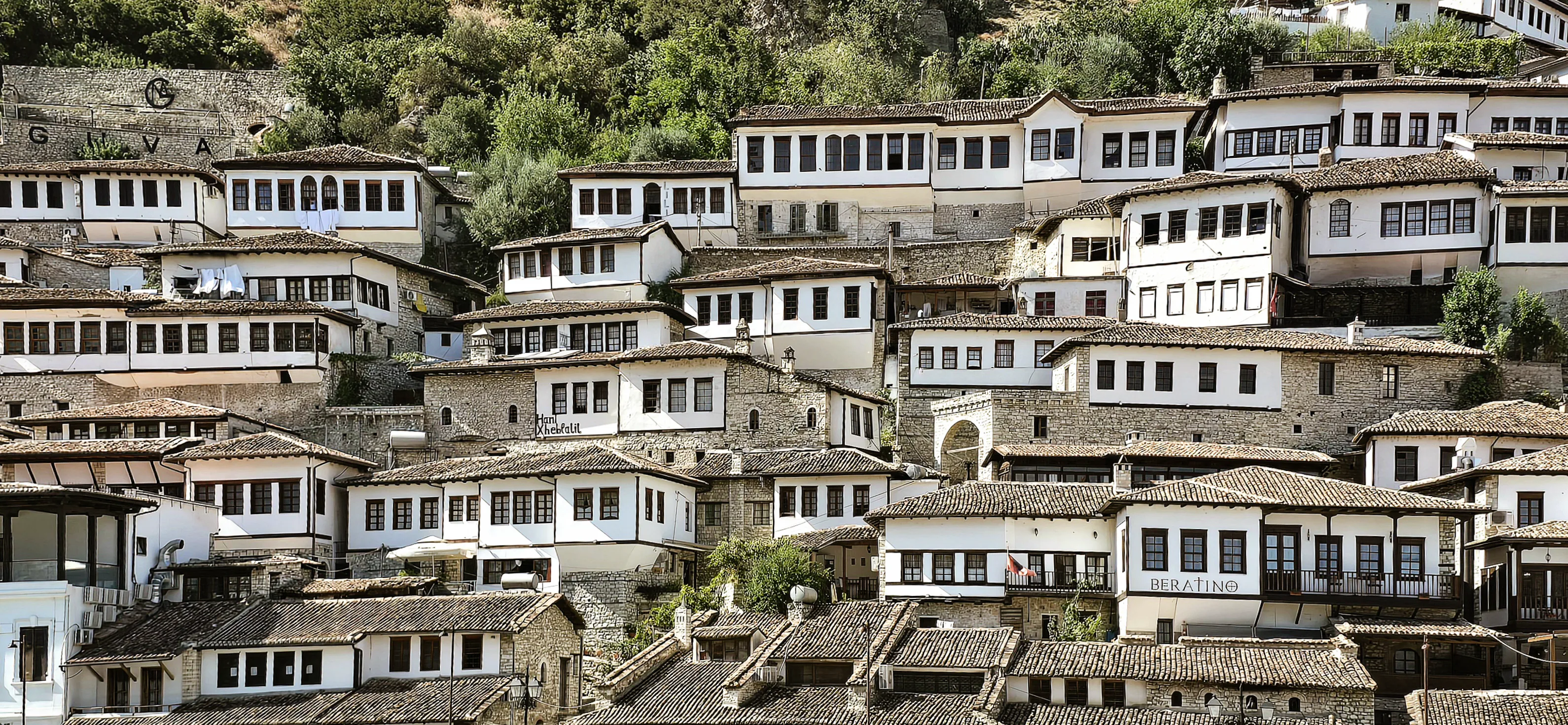
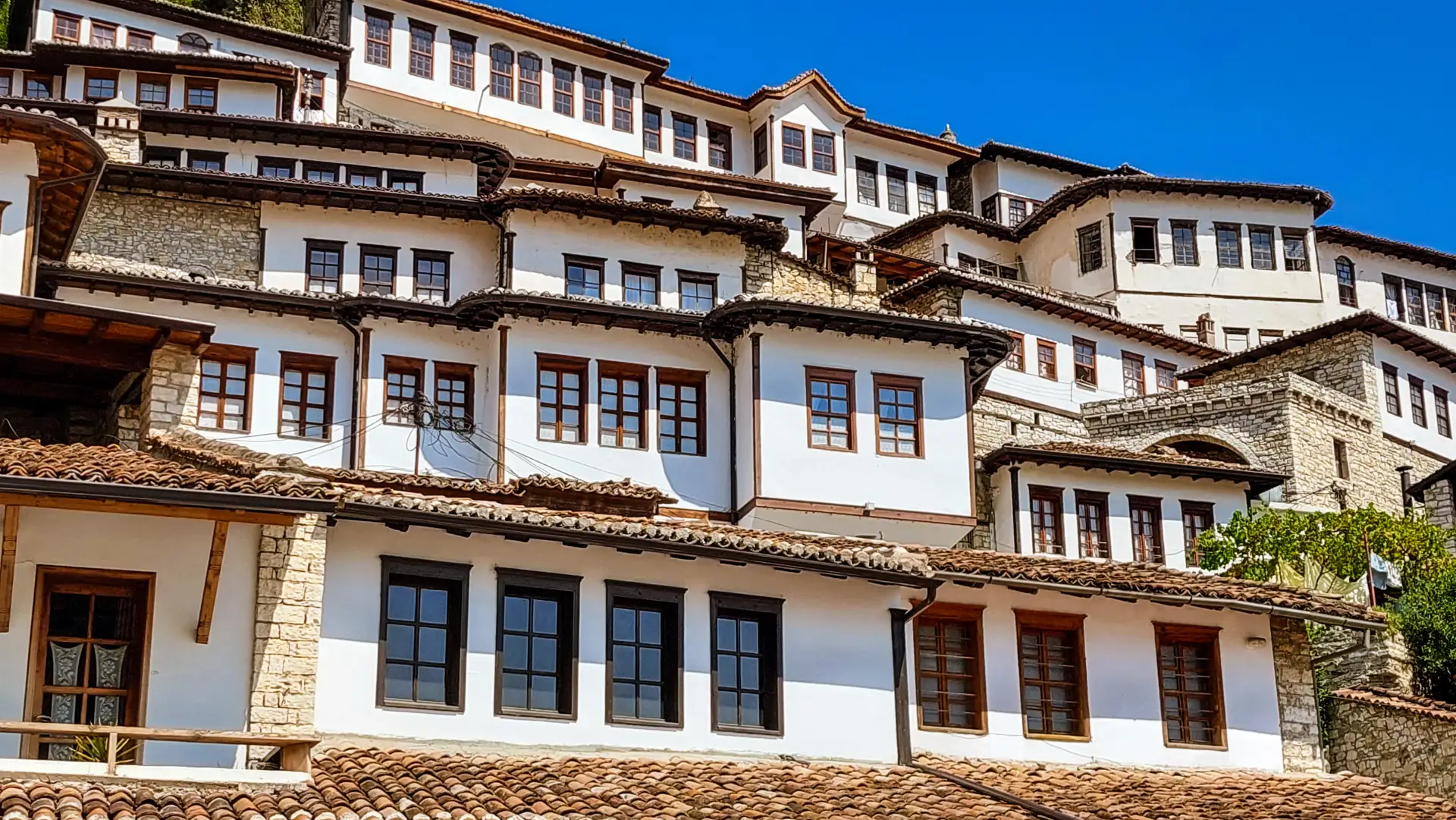
Berat is the one most travelers fall in love with first. The Mangalem and Gorica quarters face each other across the Osum River), their whitewashed Ottoman houses stacked so densely that each one's roof becomes the next one's terrace. From below, the rows of windows reflect the morning light like a thousand watching eyes — which is exactly how the city got its nickname.
What to see at Berat
The Mangalem quarter. This is the famous postcard view. Walk along the riverside promenade at golden hour for the best angle. The narrow uphill lanes inside the quarter are quieter than the main strip and feel completely lived-in.
Berat Castle (Kalaja). Unlike most European castles, Berat's citadel is still inhabited — about 30 families live within its walls, in houses that have been continuously occupied for centuries. Inside, you'll find Byzantine churches, the Onufri Iconographic Museum (a small but exceptional collection of medieval frescoes), and views that take in the entire river valley below.
The Gorica bridge. A 1780 Ottoman stone bridge connects the Mangalem and Gorica quarters. Worth crossing on foot just to look back at Mangalem from the other side.
Ethnographic Museum. Set inside an 18th-century Ottoman merchant's house, it shows you what daily life looked like in the city's golden age — kitchens with copper, traditional looms, ground-floor stables.
How to actually visit Berat from Durrës
The drive from Durrës is about 2 hours each way. Possible as a day trip, but rushed. Two guided options we run:
- [Berat & local wine tasting experience](/tours/berat-and-local-wine-tasting-experience) — pairs the UNESCO city walk with an afternoon at a family vineyard in the surrounding hills. Indigenous Albanian grapes you won't find anywhere else.
- [Bogova Waterfall & Berat Castle day trip](/tours/bogova-waterfall-and-berat-castle-day-trip-from-durres) — pairs Berat with the most photogenic waterfall in southern Albania. Long day but the variety pays off.
- [Berat Castle, Local Family Visit Full Day Tour](/tours/berat-castle-local-family-visit-full-day-tour) — the slower-paced, deeper-dive option with a meal inside a local family's home in the castle quarter.
2. Gjirokastër — The Stone City of Slate Roofs
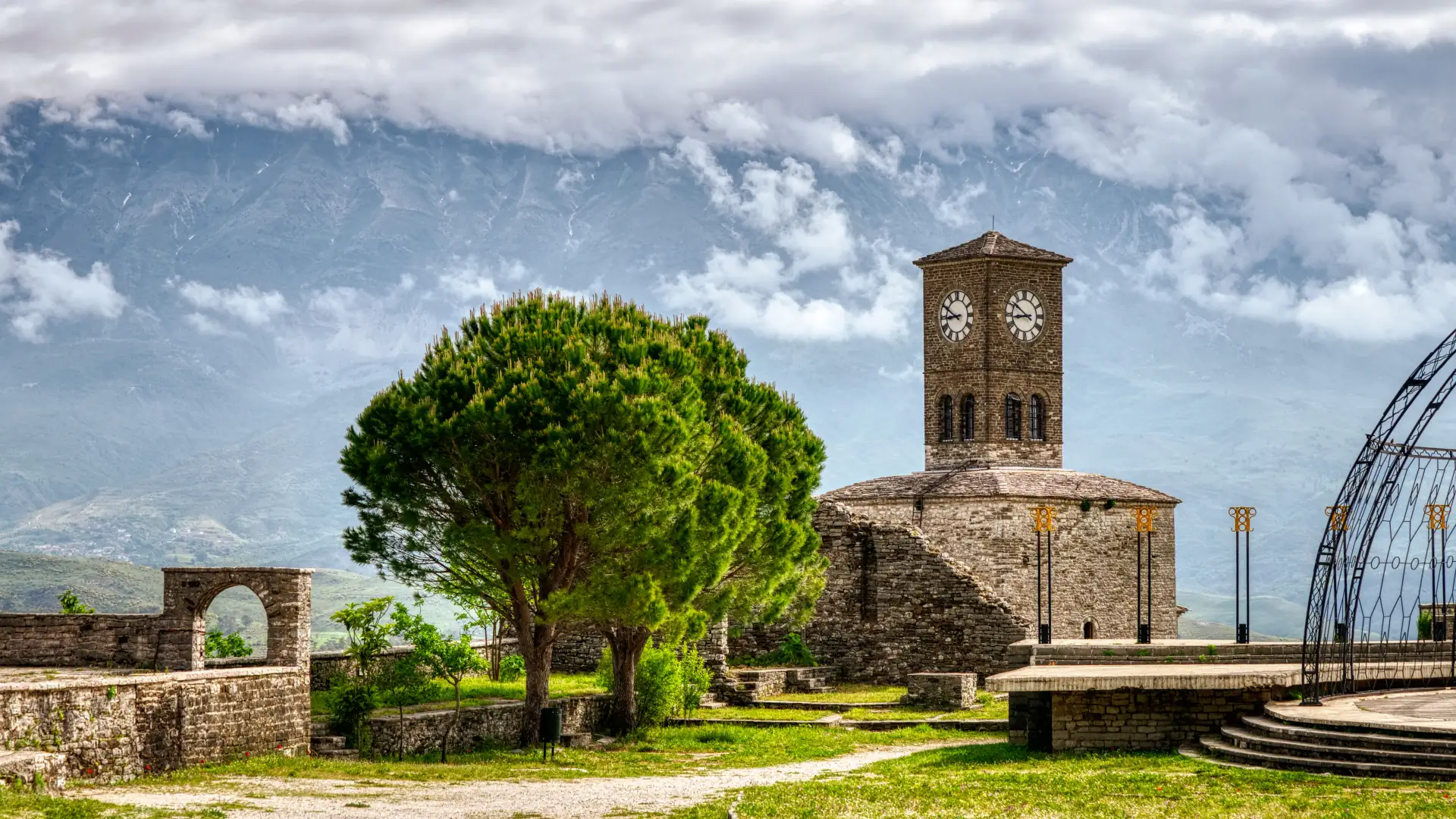
Gjirokastër is Berat's quieter, more atmospheric counterpart. Where Berat is white-washed and Mediterranean, Gjirokastër is grey stone, slate, and weight. The whole town is built into a steep hillside under one of the largest castles in the Balkans, and every roof in the old quarter is made of overlapping slate tiles cut from local quarries. From above, the town looks like a single rippling silver surface.
It's also a city of writers. The novelist Ismail Kadare — Albania's most internationally famous author — was born here, and so was Enver Hoxha, the country's communist-era dictator. The contradiction is part of what gives the place its strange weight.
What to see at Gjirokastër
Gjirokastër Castle. Vast, ancient, and still atmospheric. The castle dates to the 12th century and houses a National Armament Museum (Ottoman swords, captured WWII artillery, even a US Air Force plane recovered after a Cold War-era forced landing).
The Cold War Tunnel. Directly under the city, a 5-level nuclear bunker built for the communist-era leadership has been opened to the public. It's eerie, brilliantly preserved, and one of the most unusual experiences in Albania. We include it in our Gjirokastër & Cold War Tunnel day tour.
Skenduli House. A perfectly preserved Ottoman-era merchant's house, still owned by the descendants of the original family. Walk-through tours give you a real sense of what wealth in 19th-century Gjirokastër looked like.
The Old Bazaar. Smaller than Krujë's, but cobbled and worth the wander. Stop for a coffee at one of the bazaar cafés and watch the slate roofs in the light.
Ethnographic Museum (Hoxha House). Built on the foundations of Enver Hoxha's birthplace. Politically charged, historically important, and one of the few places that openly discusses Albania's complicated communist past.
How to visit Gjirokastër from Durrës
A 3.5-hour drive each way — too far to do alone in a day comfortably. Our Gjirokastër tour and Cold War tunnel day tour from Durrës handles the logistics and bundles the highlights. If you want longer, Gjirokastër is a beautiful place to stay overnight — the family-run guesthouses inside the castle quarter are among the best-priced UNESCO-site accommodations in Europe.
3. Butrint — The Layered Ancient City on a Lake
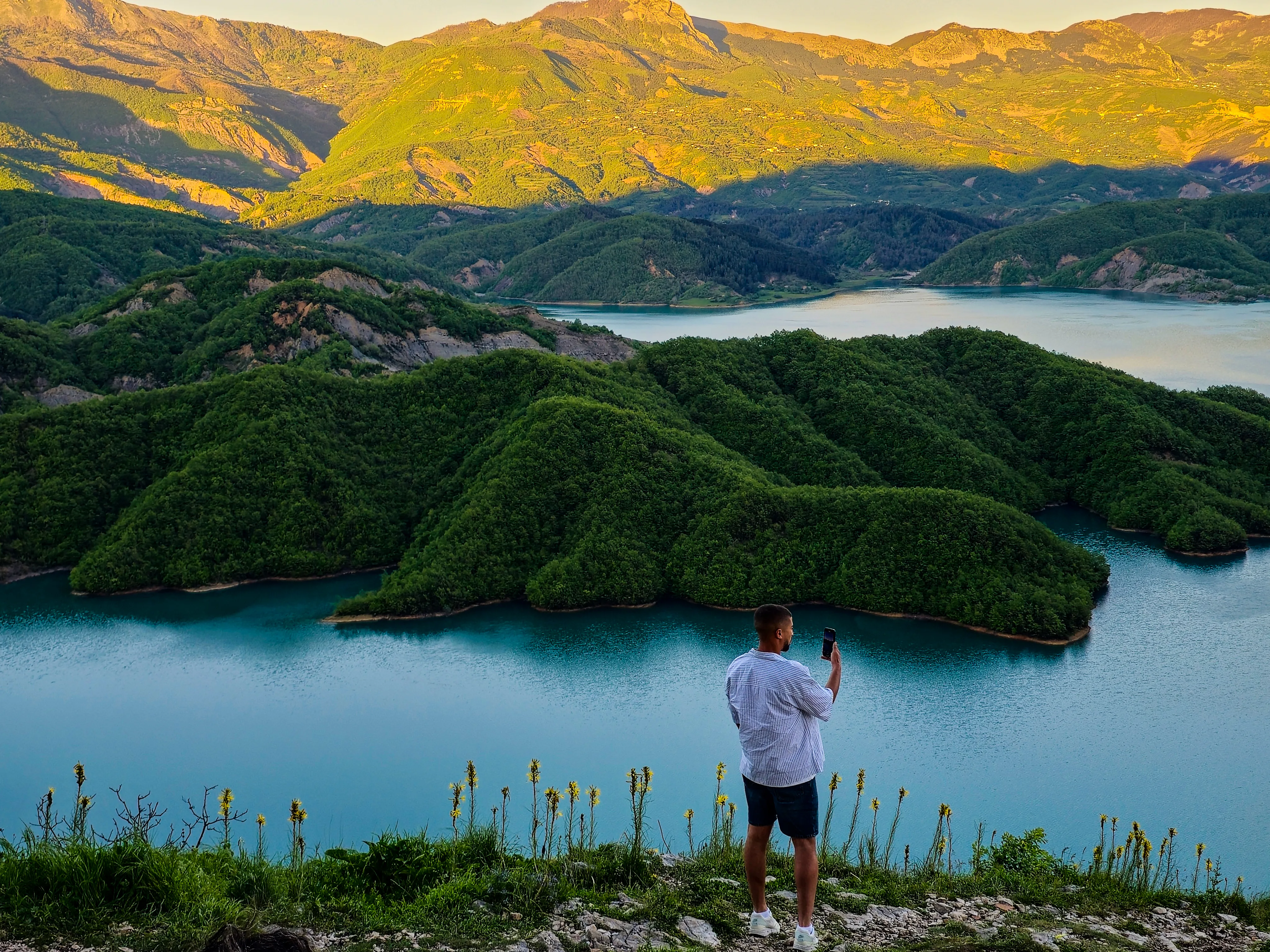
Butrint is different from the other two. Berat and Gjirokastër are still cities — places where people get coffee and pay rent. Butrint is an archaeological site, a peninsula jutting into a lagoon south of Sarandë, where the ruins of five successive civilizations sit layered under cypress and oak.
Founded by Greek colonists in the 7th century BC as Buthrotum, the city was rebuilt as a Roman colony by Julius Caesar, then expanded under the Byzantines, fortified by the Venetians, and finally abandoned to malaria during the Ottoman era. Each layer is still visible. You can walk from a Greek theatre into a Roman forum, across a 6th-century Byzantine baptistery floor, and up to a Venetian watchtower in under an hour.
What to see at Butrint
The Greek Theatre. Carved into the hillside in the 2nd century BC, still in use for the occasional summer concert. Acoustics so good a whisper from the stage carries to the top rows.
The Baptistery. One of the largest early-Christian baptisteries in the Mediterranean. Its mosaic floor — covered in protective sand most of the year and revealed periodically — features peacocks, deer, vines, and geometric medallions, all dating to the 6th century.
The Lion Gate. A massive Hellenistic stone gateway named for the carved lion-and-bull lintel above it. One of the most photographed images of ancient Albania.
The Venetian Tower. Built on the acropolis in the 15th century, with panoramic views over the lagoon, the Vivari Channel, and the Greek island of Corfu on a clear day.
The wetland boardwalks. Easy to miss if you stay on the main archaeological loop, but the wooden boardwalks through the marshes show you Butrint's other side — herons, kingfishers, water lilies, and total quiet.
How to visit Butrint from Durrës
This is the longest haul of the three. Butrint is 4 hours from Durrës each way, near Ksamil at Albania's southern tip. Realistically, do not try this as a day trip from Durrës alone — you'll spend 8+ hours in the car for 2 hours of ruins.
The smart move: do Butrint as part of a longer southern itinerary, or combine it with Ksamil (20 minutes away) on the same day. Our Ksamil, Blue Eye & Tepelena full-day tour gets you into the Ksamil/Butrint area for a single long day — Butrint can be added on request if it's your priority.
Which UNESCO Site Should You Prioritize?
If you only have time for one:
- Berat is the best "first UNESCO" experience for Albania — easiest to reach, the most photogenic, and the broadest range of things to see in a half-day.
- Gjirokastër is the best for travelers who want a slightly weirder, deeper, more atmospheric stop. The Cold War tunnel alone is worth the drive.
- Butrint is the best for archaeology enthusiasts and history nerds. If you're already going as far as Ksamil for the beaches, you're already there.
If you have time for two: Berat + Gjirokastër is the easiest pairing geographically — both are in central/southern Albania and you can do them on a 2-day road trip without backtracking.
All three in one trip is possible, but you'll want at least 5 days dedicated to it, ideally including an overnight in Gjirokastër and one in Ksamil/Sarandë for Butrint.
Practical Tips for All Three Sites
- Wear real shoes. All three sites involve cobblestones, uneven stone steps, and steep paths. Sandals will hurt by hour two.
- Bring cash. Entry fees are small (typically 200–500 lekë per person, ~€2–5) but card payments are still uncommon at the sites themselves.
- Go early. Morning light is better for photos, the crowds are smaller, and the heat in summer is manageable. Aim to be at any of the sites by 9am.
- A guide pays off. UNESCO sites without context are just old buildings. A local guide (ours, or anyone's) turns the visit from "nice photos" into "this is one of the most layered places I've ever been."
- Don't skip the food. Berat is famous for pumpkin pite, Gjirokastër for qifqi (small mint-and-rice fried balls — local specialty), Sarandë for grilled seafood. None of these are tourist gimmicks — they're regional specialties locals are quietly proud of.
See All Three with Us
Putting these three sites on one itinerary is the kind of logistical puzzle we've been solving for years. If you want help routing a trip that includes one, two or all three UNESCO sites — combined with the coastal, mountain, or food experiences that fit your travel style — browse our full tour list or drop us a message with what you're looking for. Most of our trips are private, so we can shape any of them around your priorities.
Albania's three UNESCO sites won't always feel this quiet. They've already started showing up on more travel lists every year. Visiting them now, while the slow pace is intact and you can still get a coffee with a local owner who'll talk to you for an hour, is the real reason to come.