Sarandë
The Ionian Gateway — sun-drenched coastal city facing Corfu, gateway to Ksamil, Butrint, and the Blue Eye Spring
Albania's Ionian Jewel
Sarandë is a sun-drenched coastal city on Albania's Ionian coast, facing the Greek island of Corfu across a narrow strait of shimmering turquoise water. With over 300 days of sunshine a year and a laid-back Mediterranean atmosphere, it has become Albania's premier southern resort destination.
But Sarandë is far more than a beach town. It's the gateway to some of Albania's most extraordinary attractions — the UNESCO World Heritage Site of Butrint, the paradise beaches of Ksamil, and the mesmerising Blue Eye Spring hidden in the forested hills inland. The city itself carries over 2,000 years of history, from its origins as the Greek colony of Onchesmos to one of the oldest synagogues ever found in the Mediterranean.
Five hours south of Durrës along the spectacular Albanian Riviera road, Sarandë rewards the journey with crystal-clear Ionian waters, fresh seafood, and sunsets that paint the strait between Albania and Corfu in shades of gold and rose.
From Onchesmos to the Ionian Gateway
From a Greek colony and Roman port to a communist military zone and today's sun-soaked resort city — Sarandë's story mirrors the dramatic twists of Albanian history itself.
AntiquityAncient Onchesmos
Sarandë began life as Onchesmos, a Greek colony that served as a port for the nearby oracle sanctuary of Dodona. Under Roman rule it grew into an important Adriatic harbour, linking the empire's eastern and western halves. Ships laden with olive oil, wine, and grain passed through its waters, and the settlement's strategic position on the Strait of Corfu ensured its continued importance through the centuries.
5th–6th CenturyEarly Christian Era
The early Christian period left some of Sarandë's most remarkable archaeological traces. A 5th-century synagogue — one of the oldest discovered in the Mediterranean — was unearthed in the city centre, its stunning mosaic floors depicting menorahs, citrons, and ram's horns. Early churches were also built during this era, reflecting the region's position at the crossroads of Roman, Greek, and early Christian cultures.
MedievalByzantine & Venetian Influence
Through the medieval centuries, Sarandë passed between Byzantine and Venetian hands. The Byzantines fortified the coastline and built churches across the surrounding hills. Later, Venetian influence brought trade connections across the Adriatic. Lëkurësi Castle was built on the hilltop above the bay to guard against seaborne raids — today it offers the most spectacular panoramic views in the entire region.
Ottoman EraA Quiet Fishing Town
Under Ottoman rule, Sarandë retreated into quiet obscurity. For centuries it remained a small fishing village, largely overshadowed by the nearby fortress city of Gjirokastër inland. The town's name evolved from 'Santi Quaranta' (Forty Saints), referring to the cave monastery of forty Christian martyrs on the hillside above the harbour. Life revolved around the sea, the olive groves, and the rhythms of a Mediterranean fishing community.
 1944–1991
Communist Military Port
During the communist era, Sarandë's proximity to the Greek border made it a sensitive military zone. Access was restricted, the port was militarised, and the town was heavily monitored. Tourism was nonexistent. Bunkers were built along the coastline and hilltops, and the population lived under tight surveillance. Yet the natural beauty of the Ionian coast remained untouched — waiting for a future that would transform the sleepy town beyond recognition.
1991–PresentAlbania's Ionian Resort City
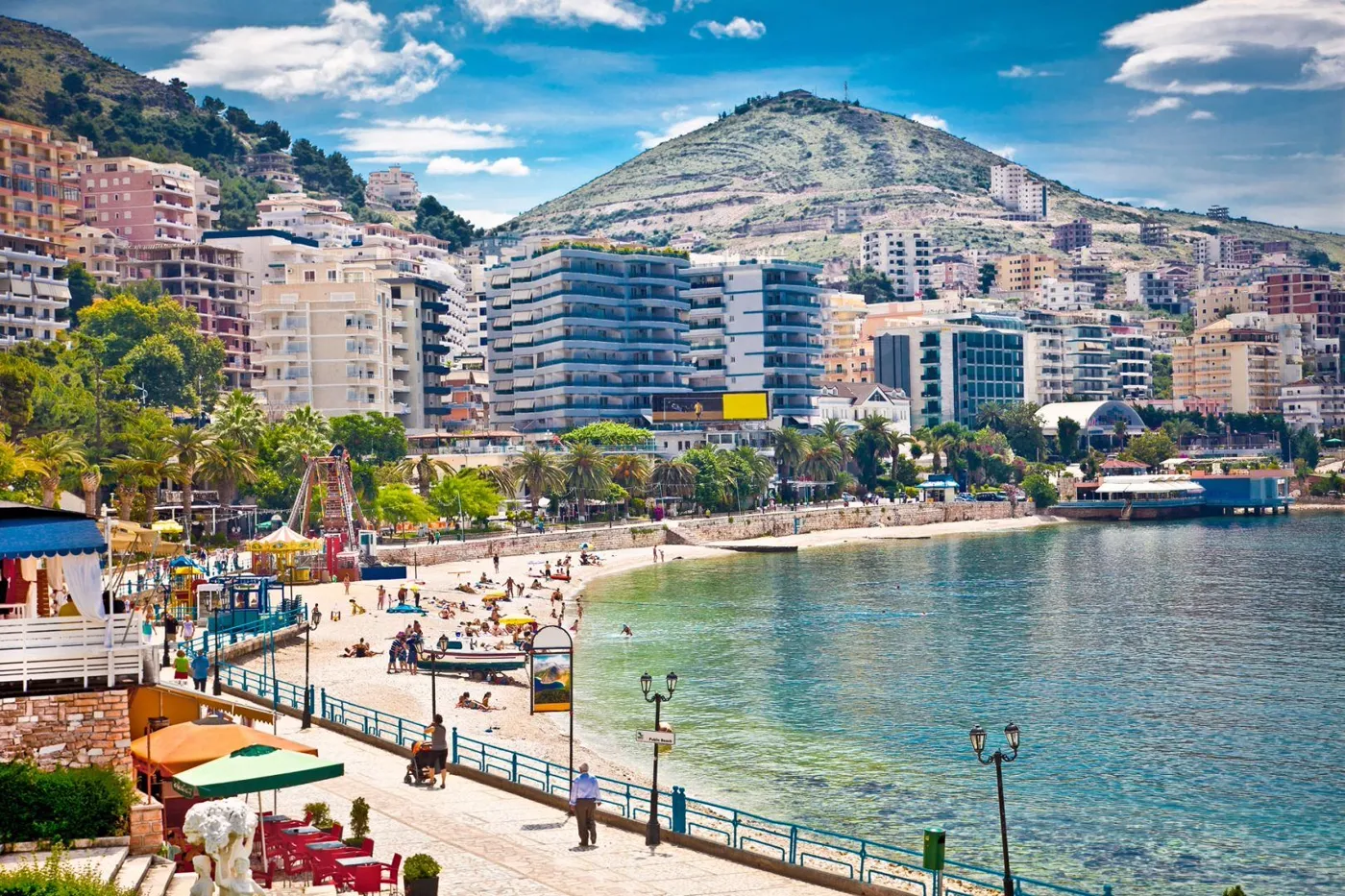
Since the fall of communism, Sarandë has undergone a remarkable transformation into Albania's premier Ionian resort destination. The waterfront promenade was rebuilt, hotels and restaurants multiplied, and the discovery of nearby Ksamil's turquoise beaches and the ancient city of Butrint (a UNESCO World Heritage Site) put Sarandë firmly on the Mediterranean tourism map. Daily ferries now connect the city to Corfu, just 2km across the strait, making it one of the most accessible gateways to the Albanian Riviera.
Landmarks & Attractions
From hilltop castles and ancient synagogues to the mesmerising Blue Eye Spring and daily ferries to Corfu — Sarandë is a gateway to some of Albania's greatest treasures.
Lëkurësi Castle
Hilltop fortress with the best panoramic views in Sarandë — sunset restaurant overlooking the bay, Corfu, and Ksamil. The castle was built in the medieval period to guard the bay from seaborne raids. Today it's the most romantic dining spot in town, with 360-degree views that stretch from the Ionian Sea to the mountains of the Greek border.
Blue Eye Spring
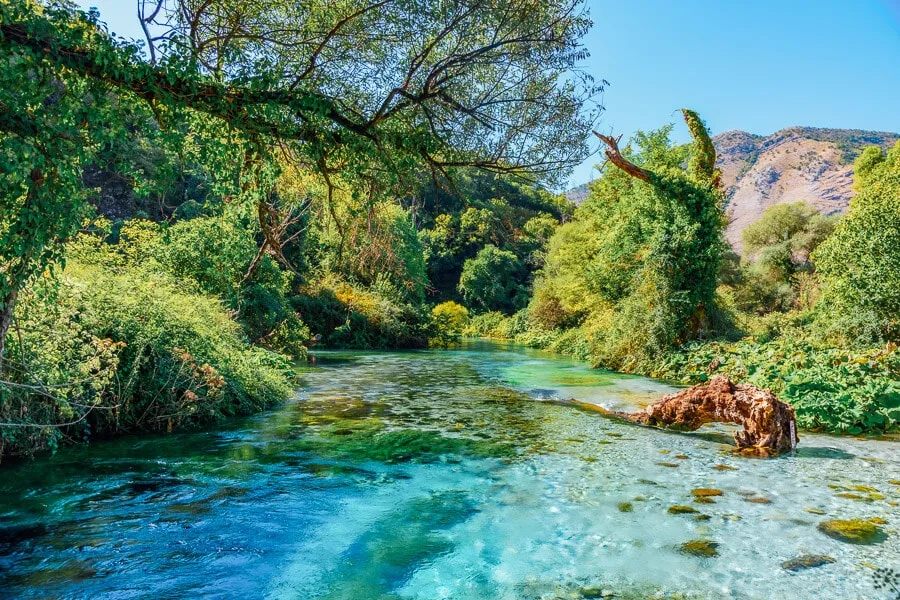
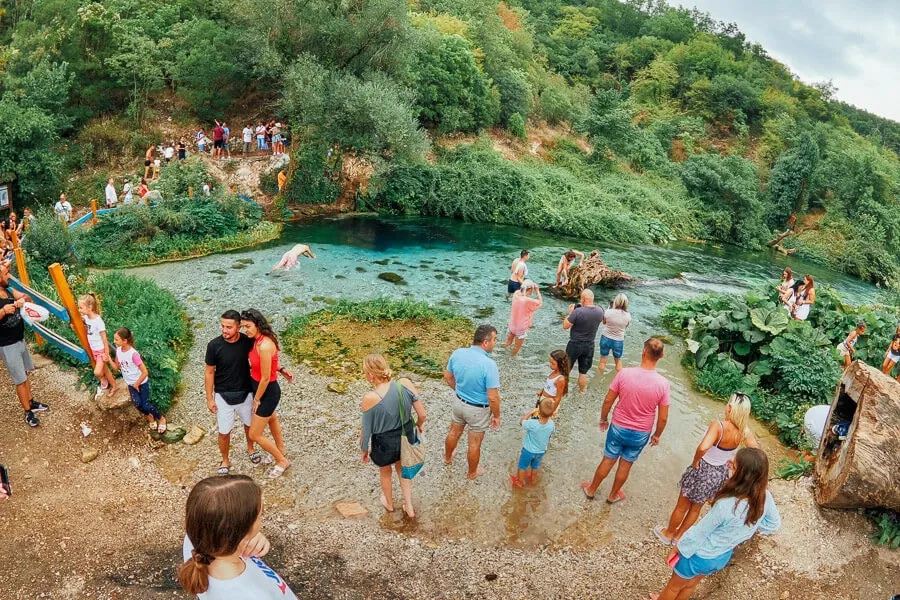
A natural spring of intense deep blue water surging from underground at 6°C, set in a lush forest 45 minutes inland from Sarandë. The 'eye' is a mesmerising pool where water rises from a depth of over 50 metres with extraordinary force. One of Albania's most extraordinary natural phenomena — the colour must be seen to be believed.
Ancient Synagogue
5th–6th century synagogue ruins discovered in the heart of Sarandë, featuring stunning mosaic floors with Jewish symbols including menorahs, citrons, and shofars. One of the oldest synagogues ever found in the Mediterranean basin, it provides extraordinary evidence of the diverse religious communities that once thrived along this coastline.
Waterfront Promenade
The lively pedestrian waterfront lined with palm trees, restaurants, and bars stretching along the curve of the bay. The evening xhiro — the traditional promenade stroll — is a beloved Sarandë ritual. Families, couples, and friends walk the seafront as the sun sets behind Corfu, stopping for gelato, coffee, or fresh seafood along the way.
Monastery of 40 Saints
The cave monastery that gave Sarandë its name — from 'Santi Quaranta', meaning Forty Saints in Italian. According to tradition, forty Christian martyrs took refuge in this hillside cave during Roman persecutions. The site retains fragments of medieval frescoes and offers sweeping views over the bay below.
Corfu Ferry
The Greek island of Corfu is just 2km across the Strait of Corfu, with daily hydrofoil and ferry connections taking as little as 30 minutes. This proximity makes Sarandë uniquely positioned as a gateway between Albania and Greece — many visitors hop between the two countries in a single day, enjoying the best of both worlds.
Beaches to Discover
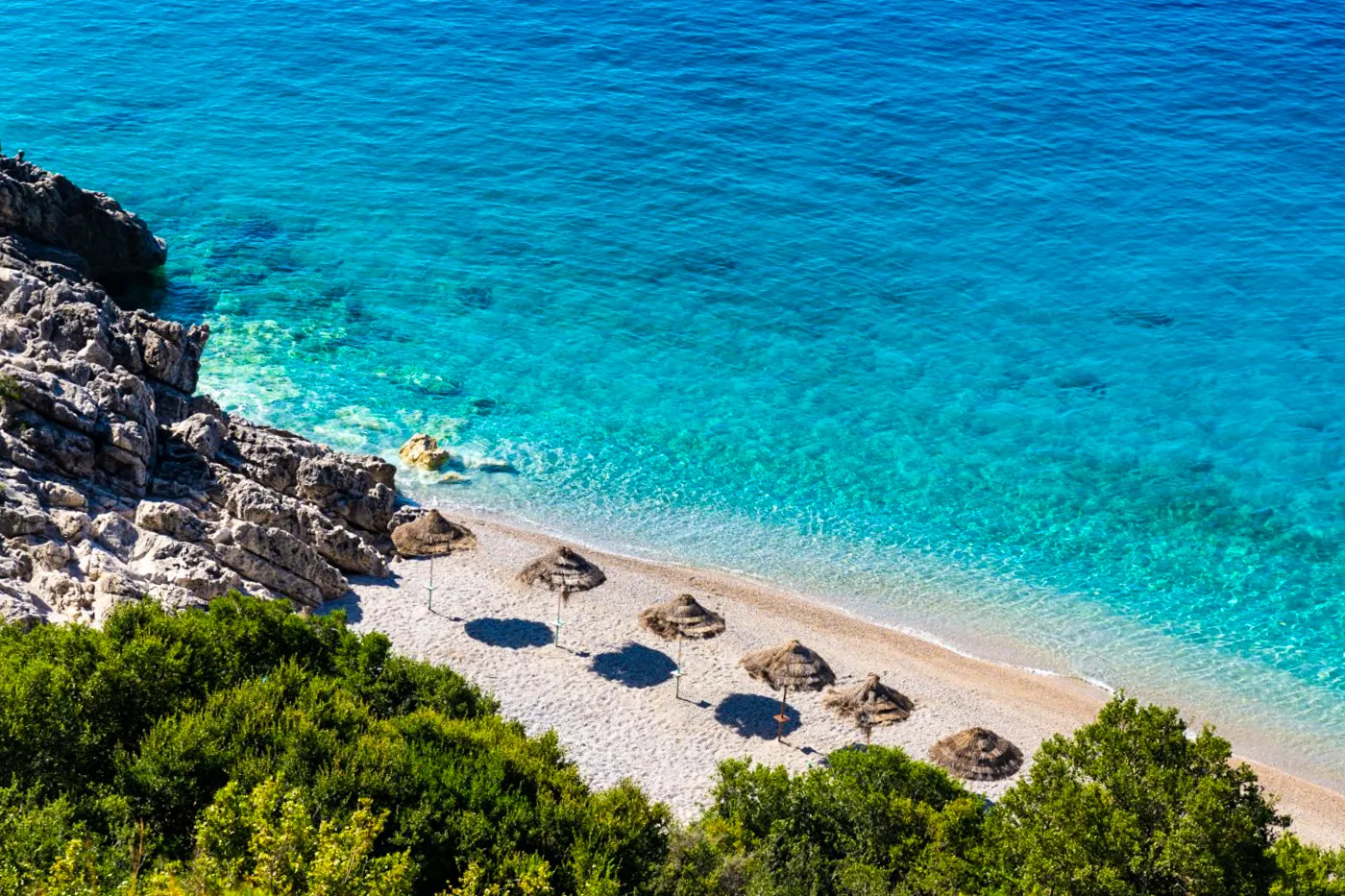
Sarandë and its surroundings offer some of the most beautiful beaches in the Mediterranean — from the city's own waterfront sand to the legendary turquoise waters of Ksamil and hidden bays accessible only by boat.
Sarandë City Beach
Sandy beach stretching along the waterfront promenade in the heart of the city. Sunbeds, beach bars, and restaurants are steps away. Perfect for a quick swim between sightseeing, with calm, shallow waters ideal for families.
Pulebardha Beach
Rocky coves with crystal-clear turquoise water south of the city, surrounded by dramatic cliffs. Less crowded than the main beaches, Pulebardha rewards the short drive with some of the clearest water on the entire Albanian coast.
Ksamil Beaches
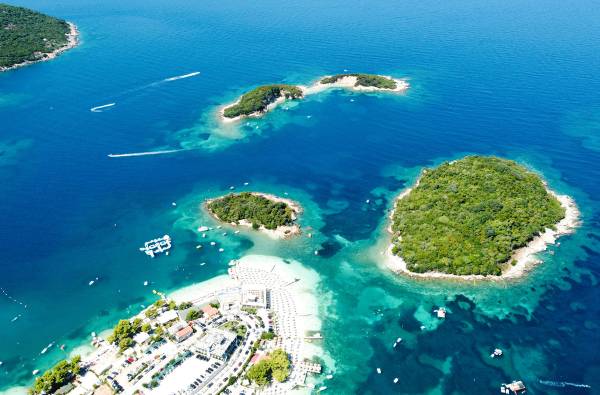
Albania's most famous beaches lie just 15 minutes south of Sarandë. Fine white sand, impossibly turquoise water, and tiny islands you can swim to — Ksamil is regularly compared to the Caribbean. Multiple beach bars and restaurants line the shore.
Mirror Beach
A stunning stretch of coastline near Ksamil known for its remarkably still, reflective water that mirrors the surrounding landscape. On calm days, the surface becomes a perfect mirror — hence the name. One of the most photogenic spots on the Albanian Riviera.
Kakome Bay
A remote, pristine bay accessible only by boat from Sarandë. Untouched by development, Kakome offers a rare glimpse of the Albanian coastline as it was before tourism arrived — crystal water, rocky shores, and complete tranquility surrounded by wild Mediterranean hillsides.
Food & Cuisine
Fresh Ionian seafood, Greek-Albanian fusion, and the finest olive oil in the country — Sarandë's cuisine is a Mediterranean love letter written in fish, citrus, and raki.
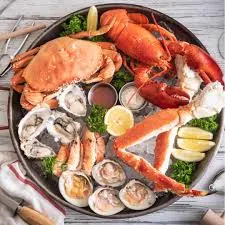
Fresh Seafood
Sarandë's restaurants serve some of the freshest seafood in Albania — grilled octopus, whole sea bream, prawns, and calamari pulled from the Ionian that morning. Waterfront tavernas compete for the catch of the day, and prices remain a fraction of what you'd pay across the strait in Corfu.
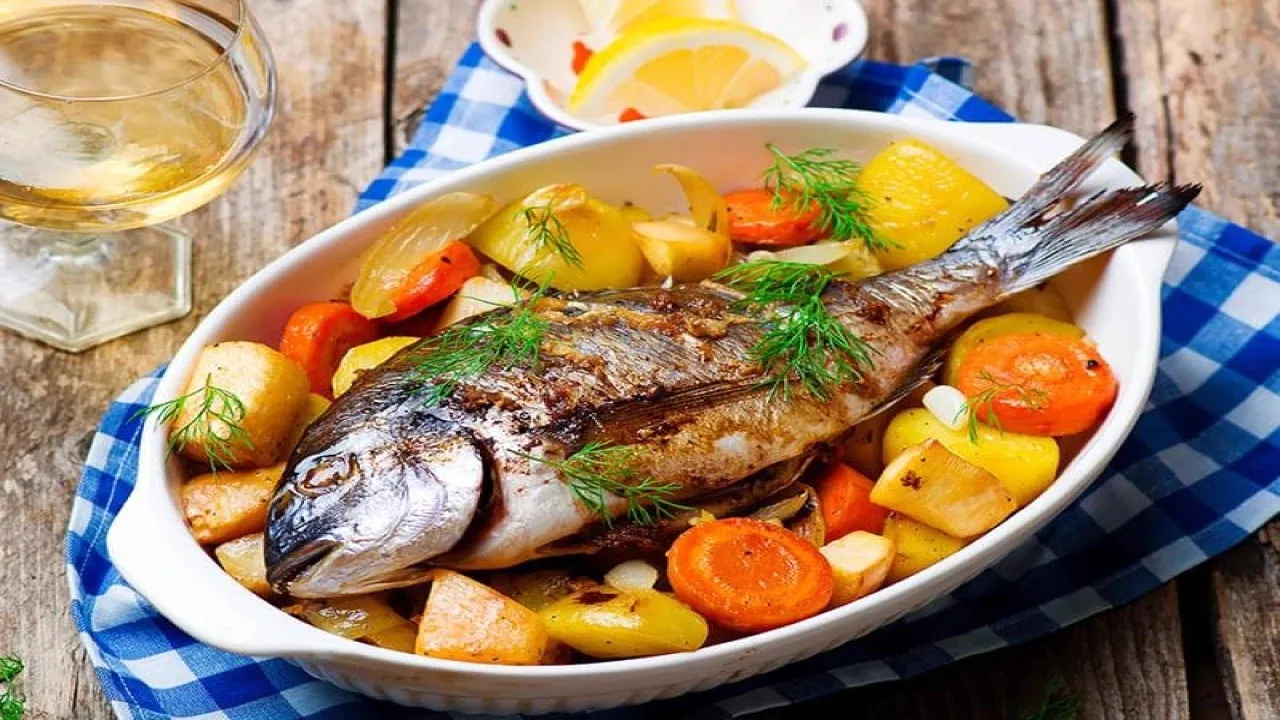
Tavë Peshku
The southern Albanian version of baked fish — whole fish layered with tomatoes, peppers, onions, garlic, and generous amounts of olive oil, then slow-baked until the flavours meld together. A staple of every Sarandë restaurant menu and the dish that best captures the town's coastal soul.

Mussels from Butrint Lake
The brackish waters of Butrint Lake, just south of Sarandë, produce famously plump, sweet mussels. Served steamed with garlic and white wine, in pasta, or in a rich tomato broth — Butrint mussels are a local delicacy that rival anything from the Italian coast.
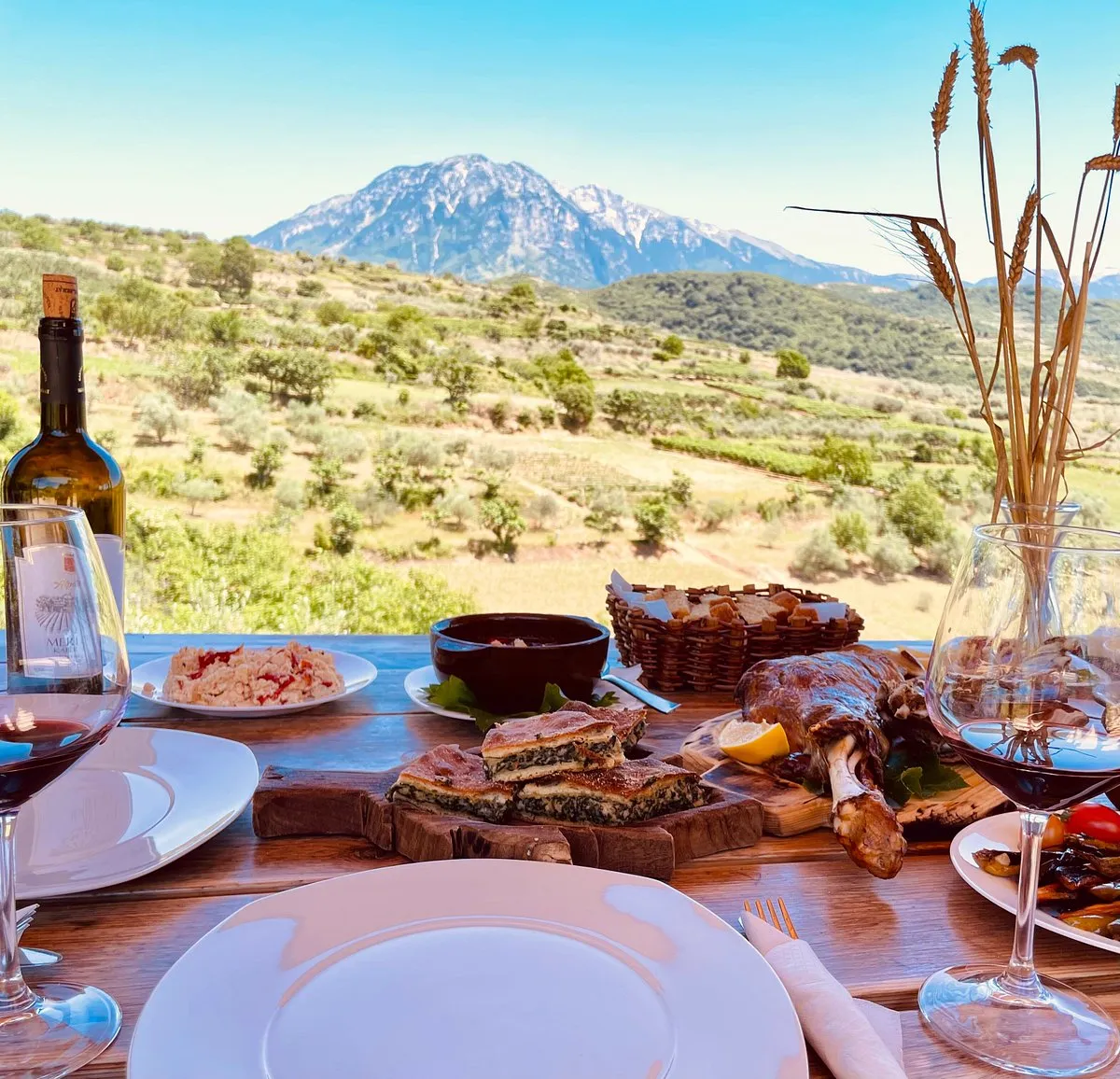
Citrus & Olive Oil
The hillsides around Sarandë are covered in ancient olive groves and citrus orchards. The local olive oil is rich, peppery, and used lavishly in every dish. Lemons and oranges from the surrounding villages find their way into everything from seafood marinades to fresh-squeezed juices and homemade limoncello.
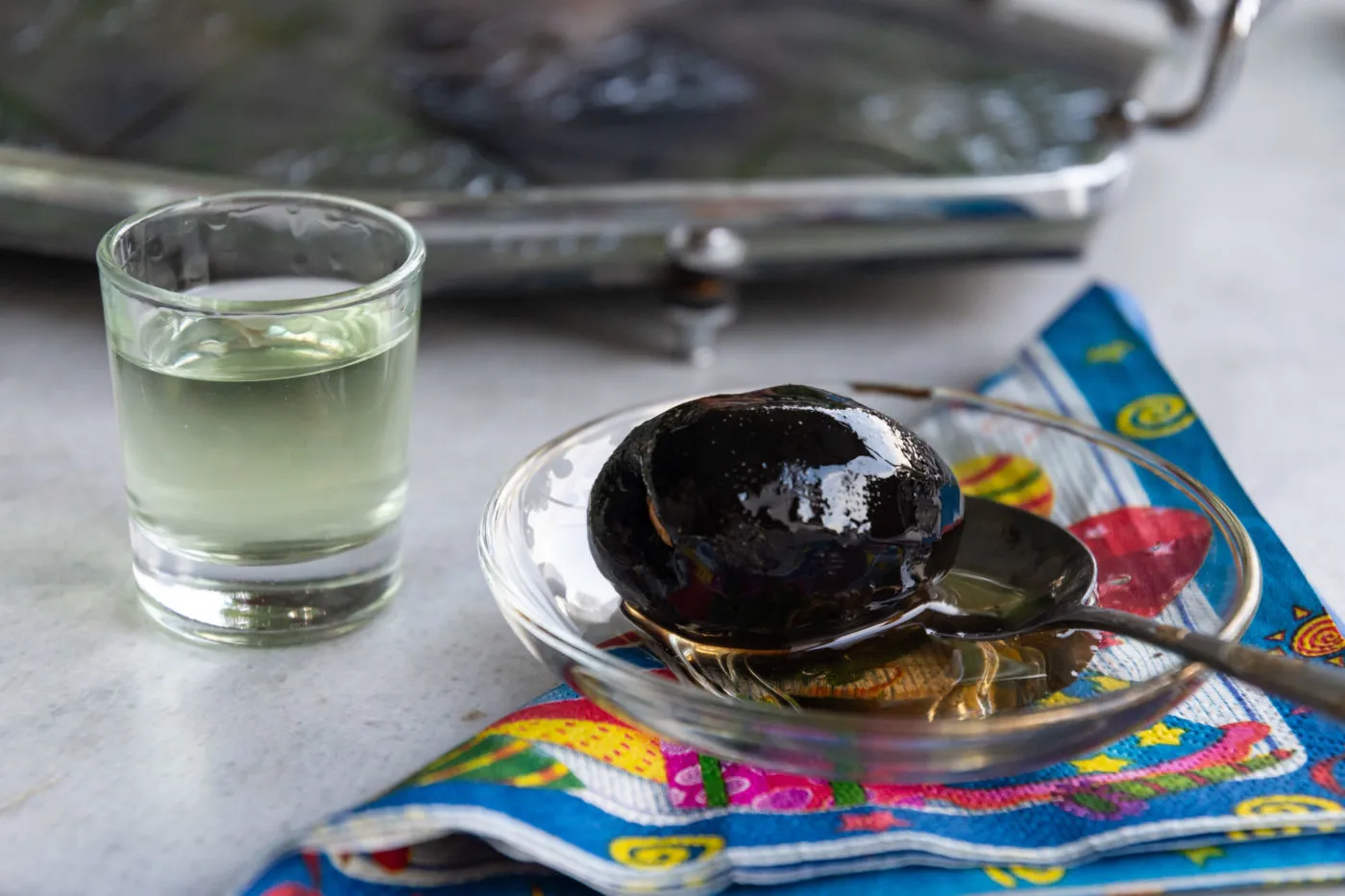
Raki
No meal in Sarandë ends without raki — the clear grape spirit that's Albania's national drink. In the south, raki tends to be smoother and more refined, often homemade by the restaurant owner. Refusing a glass is considered impolite. Some establishments also serve raki flavoured with local herbs, honey, or walnuts.
Best Time to Visit Sarandë
With over 300 days of sunshine, Sarandë is a year-round destination — but the shoulder seasons of spring and early autumn offer the perfect balance of warm weather and uncrowded beaches.
Spring
April – May16–24°CWarm and uncrowded — wildflowers cover the hillsides, the water begins to warm, and the town is peaceful before the summer rush. Ideal for visiting Blue Eye Spring and Butrint without the crowds.
Summer
June – August28–36°CHot, sunny, and buzzing with life. This is peak season — the beaches are packed, the promenade is lively until late, and ferries from Corfu bring a constant stream of visitors. Book accommodation well in advance.
Autumn
September – October18–28°CThe sweet spot for many visitors. The sea is still warm from summer, crowds thin out, and golden light bathes the coastline. September feels like summer; October brings harvest season in the olive groves.
Winter
November – March8–16°CMild by Albanian standards. Many tourist businesses close, but the town retains a quiet charm. Citrus trees are heavy with fruit, the light is soft, and you'll have the archaeological sites and Blue Eye Spring almost to yourself.
How to Reach Sarandë
Sarandë is approximately 5 hours south of Durrës via the stunning Albanian Riviera coastal road — one of the most scenic drives in the Mediterranean. The route passes through Vlorë, the Llogara Pass (1,027m), and the beautiful villages of the Riviera.
Daily ferries connect Sarandë to Corfu, Greece, with the crossing taking as little as 30 minutes by hydrofoil. This makes Sarandë easily accessible from Corfu International Airport — a popular route for visitors combining Greece and Albania.
From Sarandë, the ancient city of Butrint (UNESCO World Heritage Site) is just 20 minutes south, the paradise beaches of Ksamil are 15 minutes away, and the Blue Eye Spring is a 45-minute drive inland. Sarandë is the perfect base for exploring Albania's entire southern Ionian coast.
Tours in Sarandë
Discover the Blue Eye Spring, explore ancient Butrint, swim in Ksamil's turquoise waters, or watch the sunset from Lëkurësi Castle — all with expert local guides.
Ready to Explore Sarandë?
Whether you want to swim in the Blue Eye Spring, explore ancient Butrint, relax on Ksamil's beaches, or watch the sunset from Lëkurësi Castle — we'll make it happen.