Albanian Food: 20 Must-Try Dishes & The Ultimate Cuisine Guide
Durrës Daily Tours
April 20, 2026
If you've never eaten Albanian food, you're about to discover one of Europe's most underrated cuisines. Tucked between Greece, Italy, and the Balkans, Albania has quietly developed a kitchen that borrows the best of each — olive oil and wild herbs from the Mediterranean, slow-cooked yogurt and filo pastry from the Ottoman tradition, and hearty meats and cheeses from the Balkan highlands — and turns them into something completely its own.
This guide covers everything you need to know before your first bite: the 20 must-try dishes, what makes Albanian cuisine distinct, where to eat in the country's top food destinations, and the best guided tours to taste it all like a local. If you've been researching why Albania is Europe's most underrated destination, the food is a huge part of the answer.
What Is Albanian Food, Really?
Albanian cuisine is a Mediterranean cuisine with deep Balkan and Ottoman roots. Think of it as what happens when a country with 450+ kilometers of coastline, fertile river valleys, and snow-capped mountains spends 2,000 years absorbing influences from Greek colonists, Roman traders, Byzantine monks, Ottoman merchants, and Italian neighbors across the Adriatic.
The result? A kitchen built on a few ironclad principles:
- Seasonality is non-negotiable. Tomatoes in August, figs in September, wild asparagus in April.
- Olive oil, not butter. Albania produces some of Europe's most aromatic single-varietal olive oils — most still pressed in small family mills.
- Fresh herbs do the heavy lifting. Mint, oregano, dill, parsley, and wild thyme are used liberally.
- Dairy is everywhere. Yogurt (kos), fresh cheese (djathë i bardhë), and kajmak (clotted cream) appear at most meals.
- Meat is respected. Lamb, veal, and kid are slow-cooked, never rushed. Pork appears mainly in Christian regions; seafood dominates the coast.
For deeper cultural context, the Wikipedia entry on Albanian cuisine is a surprisingly thorough primer.
Is Albanian Food Spicy? Is It Mediterranean? The Quick Answers
Before we dive into the dishes, let's answer the questions travelers Google most.
Is Albanian food Mediterranean? Yes — officially recognized as part of the Mediterranean diet, with olive oil, fresh vegetables, seafood, legumes, and whole grains at its core.
Is Albanian food spicy? Generally no. Albanian cooking favors herbs, garlic, and lemon over chilies. A few regional dishes include mild red pepper paste, but nothing that will challenge your palate.
Is Albanian food halal? Much of it is — about 60% of Albanians identify as Muslim, so pork-free menus are the norm in many restaurants, and halal certification is increasingly common in Durrës and Tirana.
Is Albanian food good? Objectively — yes. Subjectively — we think it's one of Europe's most exciting food scenes right now.
The 20 Must-Try Albanian Dishes
1. Byrek — The Pastry That Runs the Country
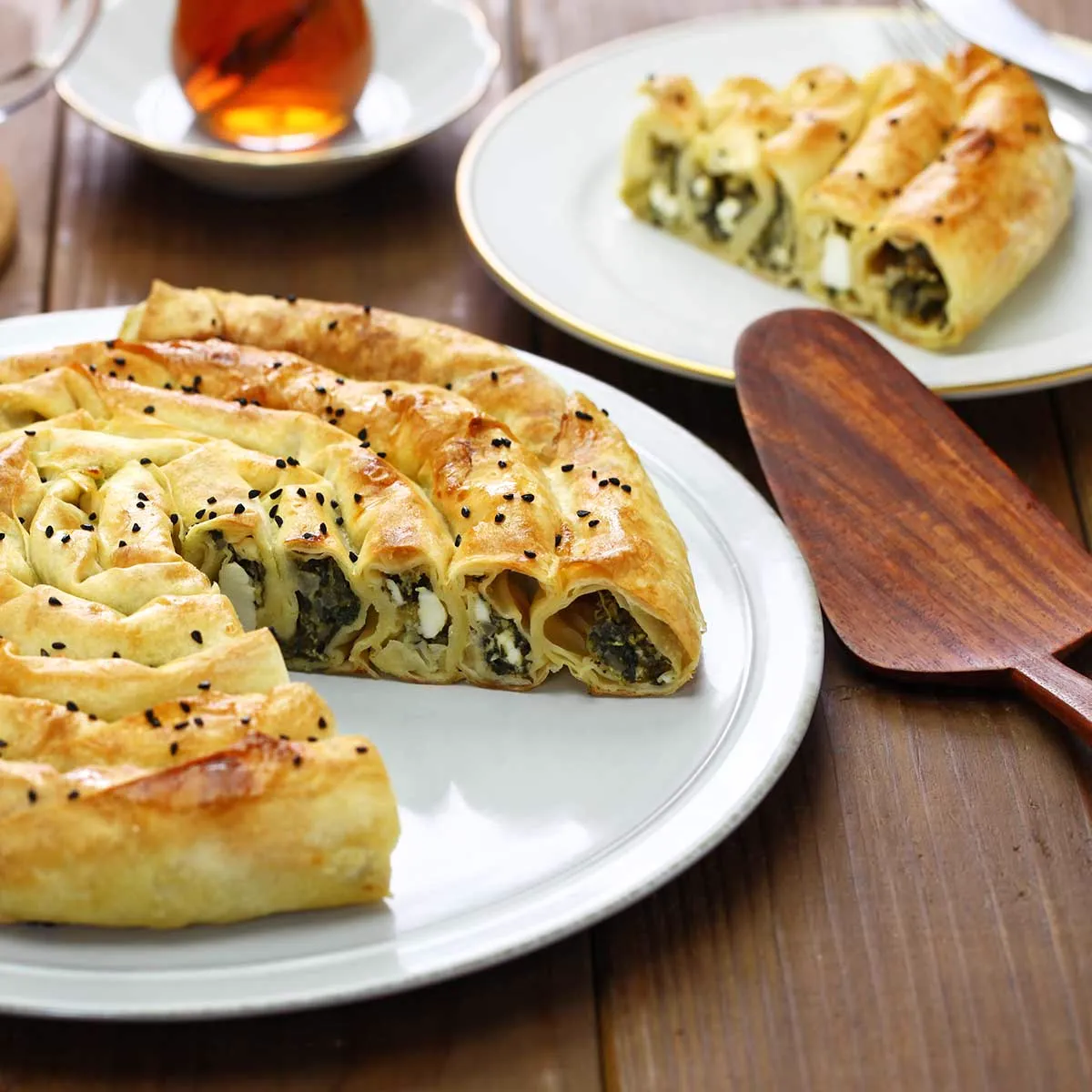
If Albania has a national dish, it's byrek (also spelled burek). Paper-thin layers of filo dough are brushed with olive oil and stacked around a filling — most commonly spinach and feta, seasoned beef, or leek. Every bakery makes it differently, and locals have legendary arguments about whose is best. The Wikipedia entry on byrek traces its history back through Ottoman kitchens.
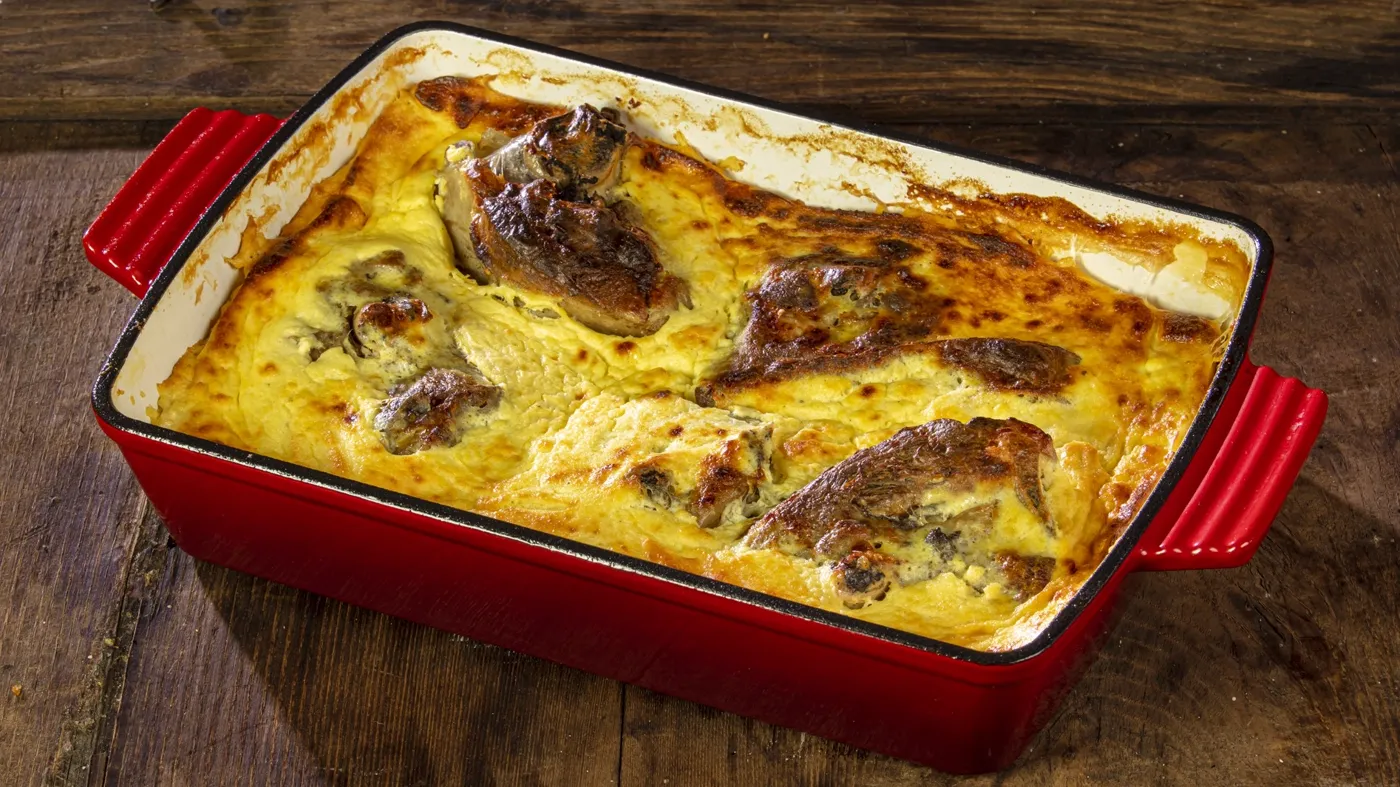
2. Tavë Kosi — The National Icon
Often called Albania's national dish, tavë kosi is slow-baked lamb smothered in a sauce of yogurt, eggs, garlic, and rice, then baked until the top turns golden. It's creamy, tangy, deeply savory, and absolutely unforgettable.
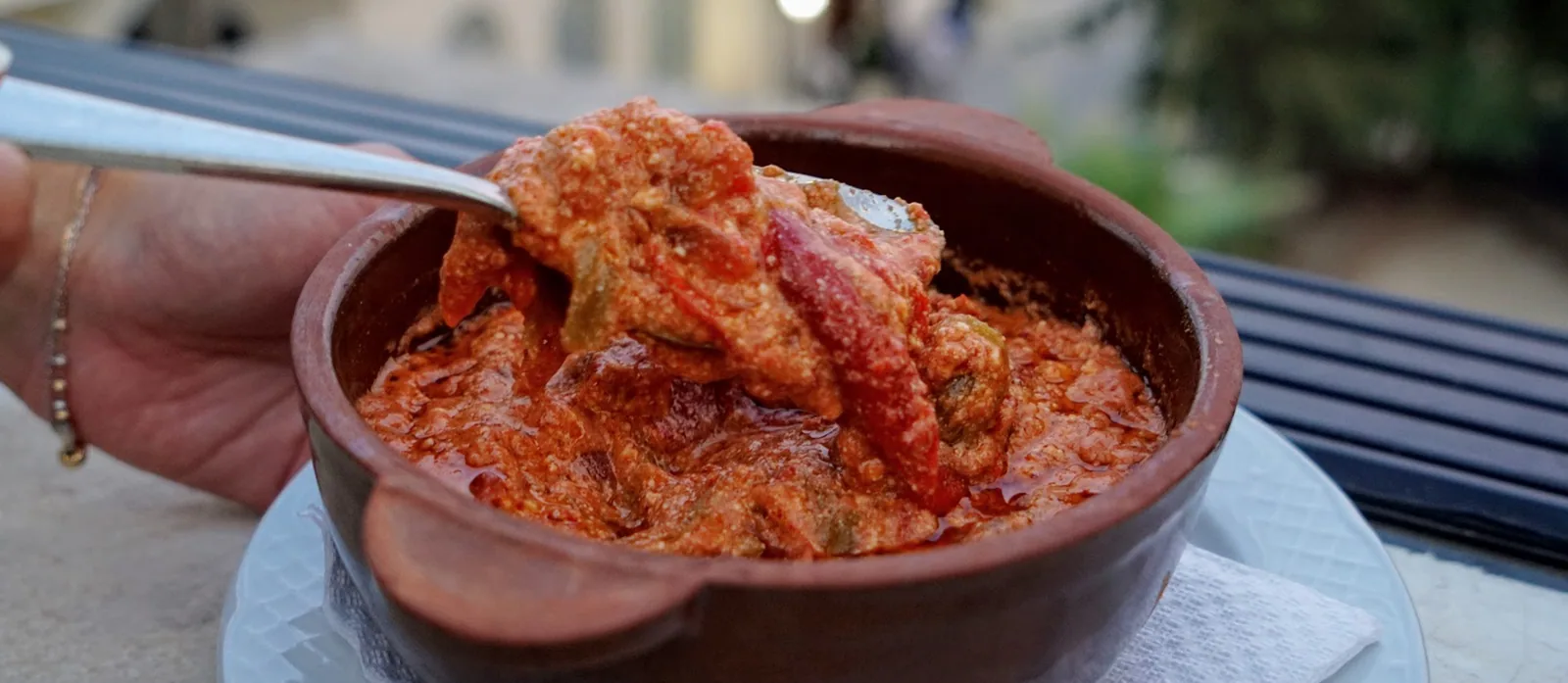
3. Fërgesë — The Summer Stew You'll Crave
A Tirana specialty: roasted red peppers, tomatoes, fresh white cheese, and sometimes veal liver, all cooked down into a thick, spoon-coatingly rich stew. Eaten with fresh bread to mop up the sauce.
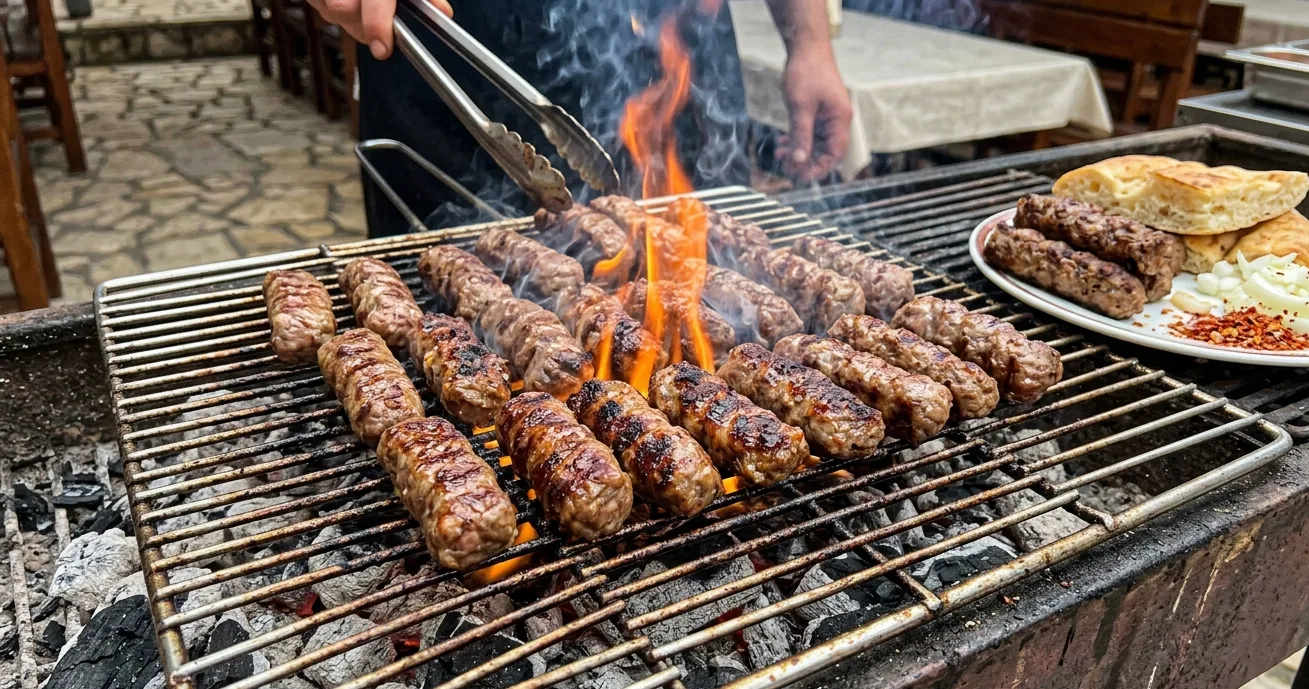
4. Qofte — Grilled Meatballs, Balkan Style
Seasoned ground meat (usually a blend of beef and lamb) with cumin, mint, onion, and a whisper of paprika, shaped by hand and grilled over open flames. Every family has its recipe. You'll find them served with kajmak and raw onion.
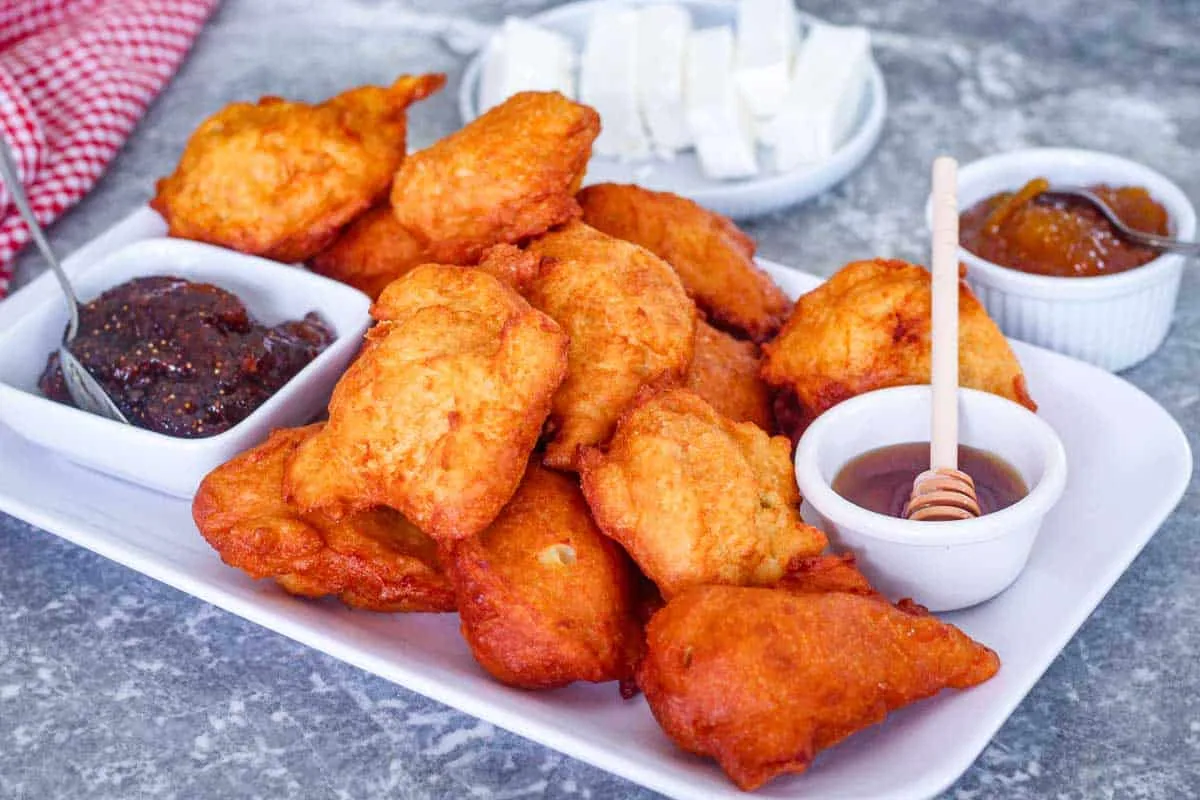
5. Petulla — Fried Dough, All Day Long
Puffy fried dough served with feta and honey for breakfast, or sprinkled with sugar as a snack. A street food staple — especially at Sunday family gatherings.
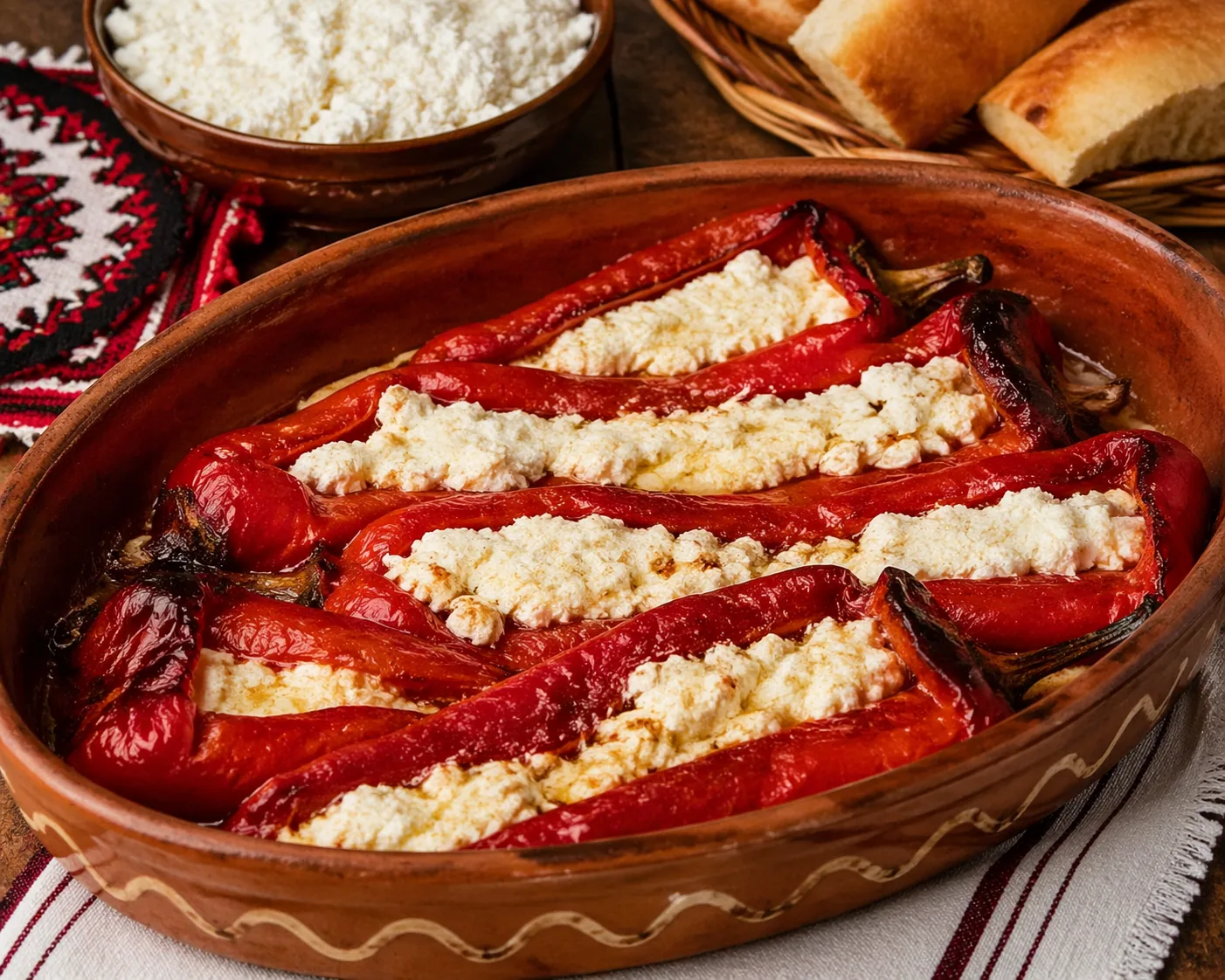
6. Speca Me Gjizë — Stuffed Peppers, Reinvented
Long green peppers filled with gjizë (a crumbly cottage-like cheese) and herbs, then baked. Simple, vegetarian, and one of the most-ordered dishes in any traditional restaurant.
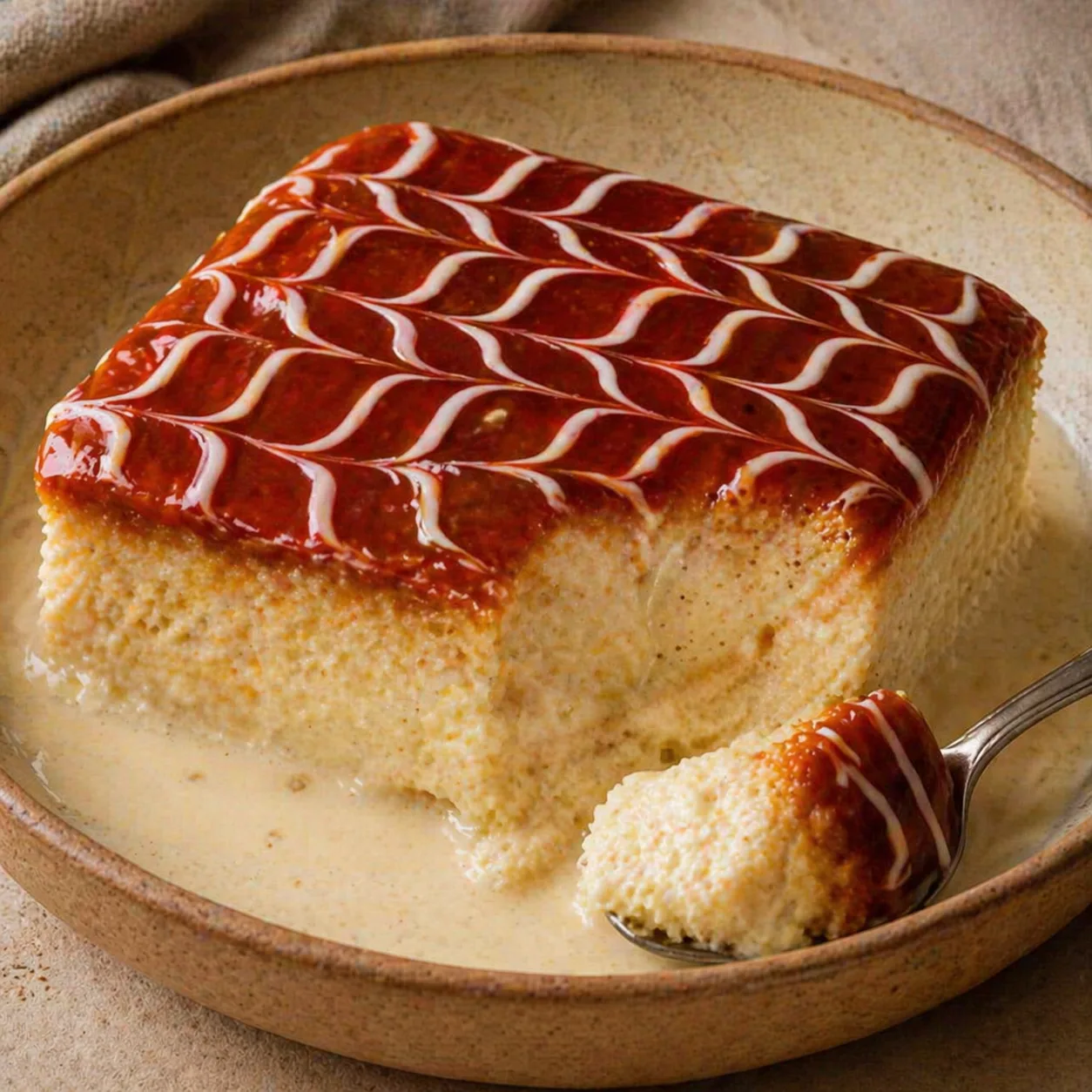
7. Trilecë — The Dessert That Took Over
A milk-soaked sponge cake topped with caramel. It arrived from Latin America (as tres leches) but Albanian bakers made it their own. You'll see it in every café from Shkodër to Sarandë.
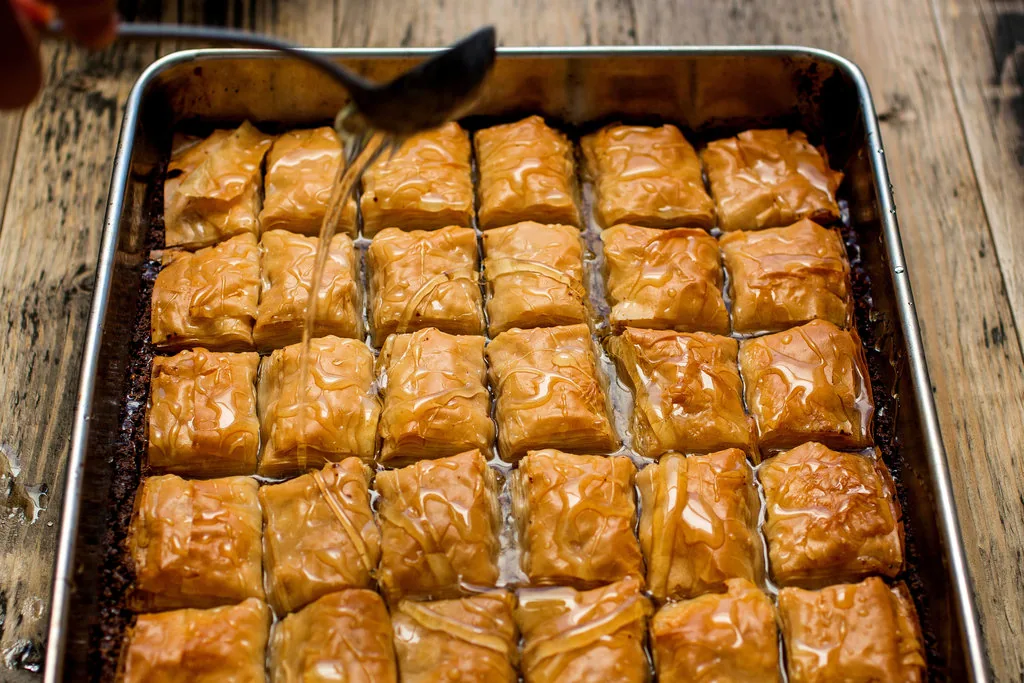
8. Baklava — The Ottoman Legacy
Layers of filo, walnuts or pistachios, and honey syrup. Heavier than Greek baklava, lighter than Turkish. Best eaten fresh and slightly warm.
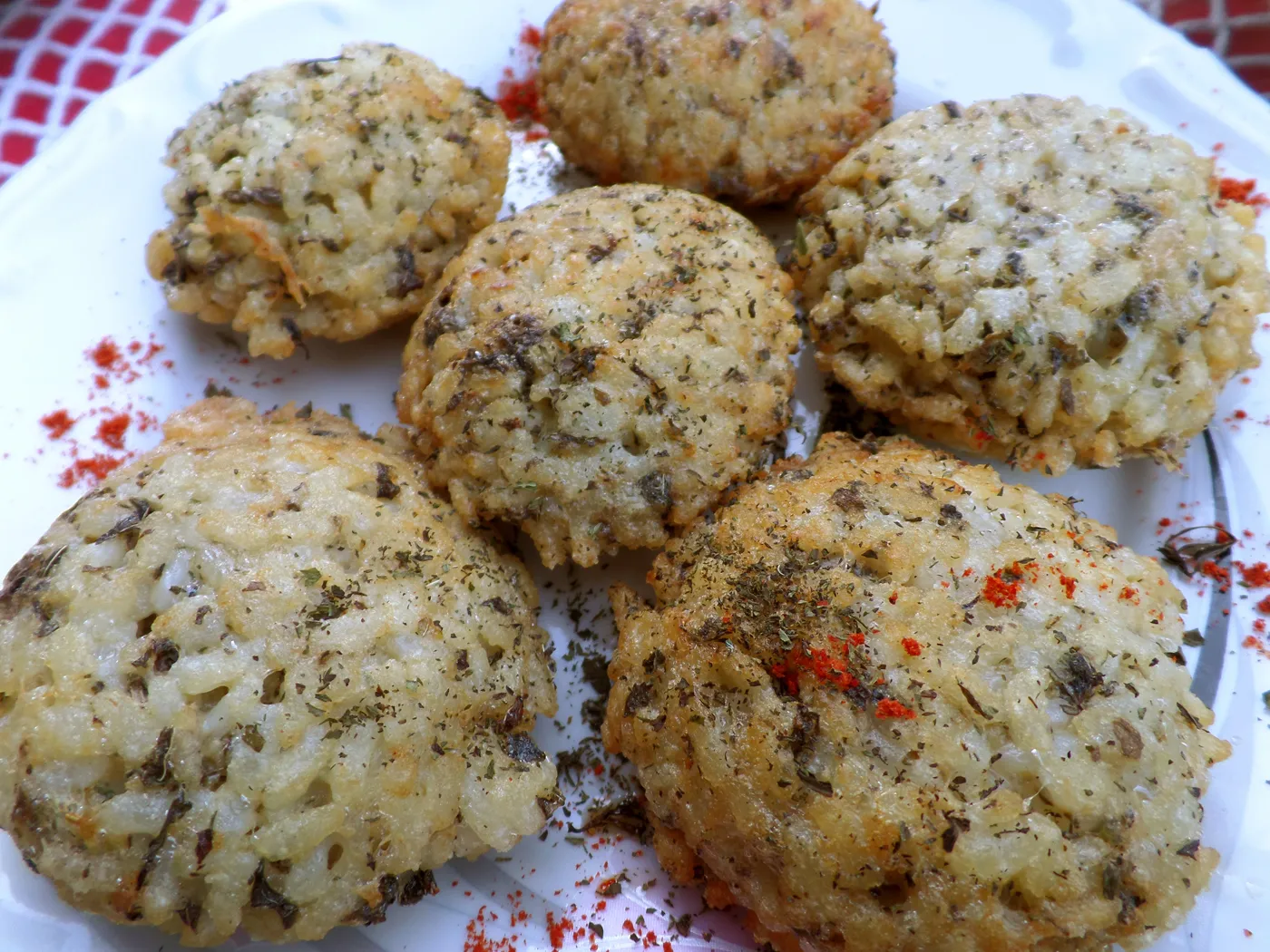
9. Qifqi — Tiny Rice Balls from Gjirokastër
Born in the UNESCO-listed stone city of Gjirokastër, qifqi are fried rice balls seasoned with mint and egg. Crunchy outside, pillowy inside. Pair with a glass of local wine.
10. Flija — The Most Patient Dish in the Balkans
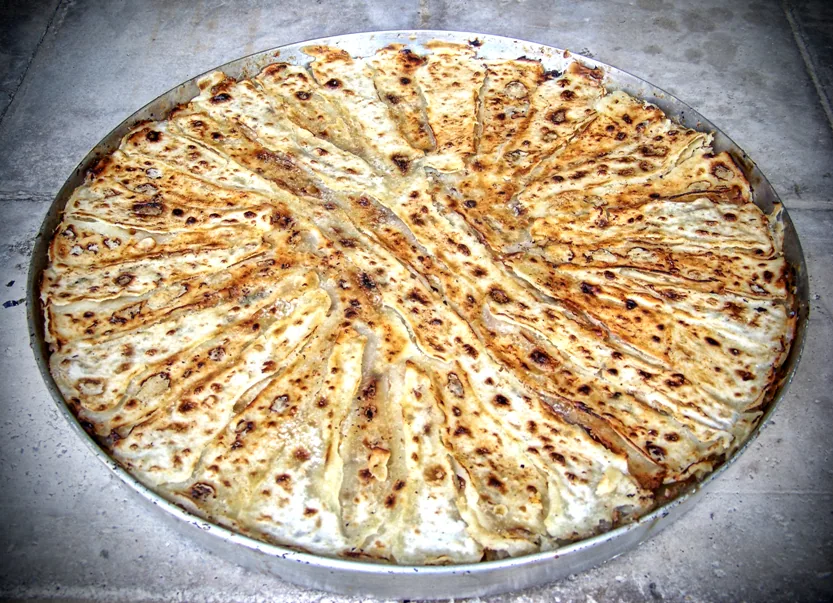
A crêpe-like pancake baked slowly over coals, one layer at a time, each brushed with cream. It takes 2–3 hours to make. Typically served at weddings and Sunday gatherings, with kajmak and wild honey.
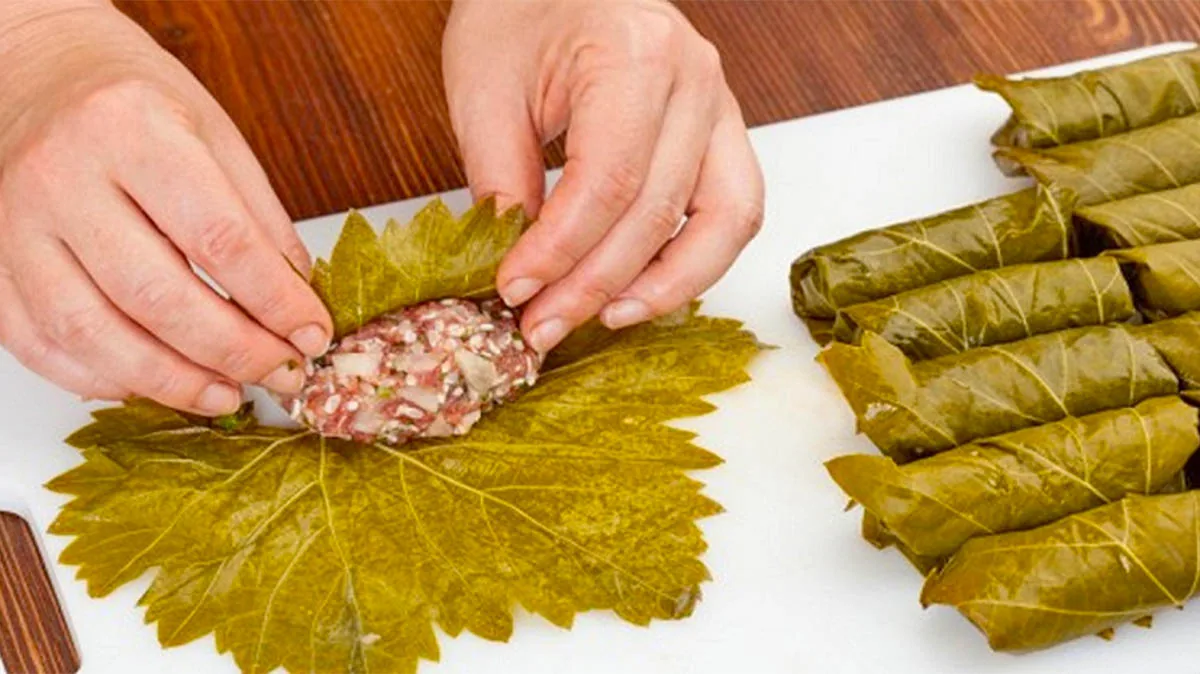
11. Japrak — Stuffed Grape Leaves
Vine leaves filled with rice, herbs, and sometimes minced meat. Served warm with yogurt. A staple in both Christian and Muslim households across Albania.
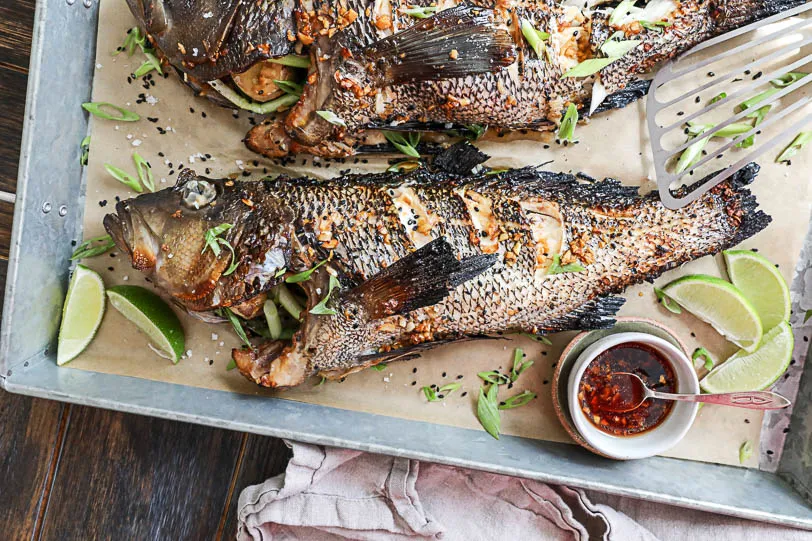
12. Peshk Në Zgarë — Grilled Fish on the Adriatic
On the coast, lunch often means a whole sea bream or sea bass, salt-rubbed, grilled over charcoal, and dressed simply with olive oil, lemon, and wild oregano. When you taste it by the sea in Durrës, you'll understand why this is our favorite way to eat in Albania.
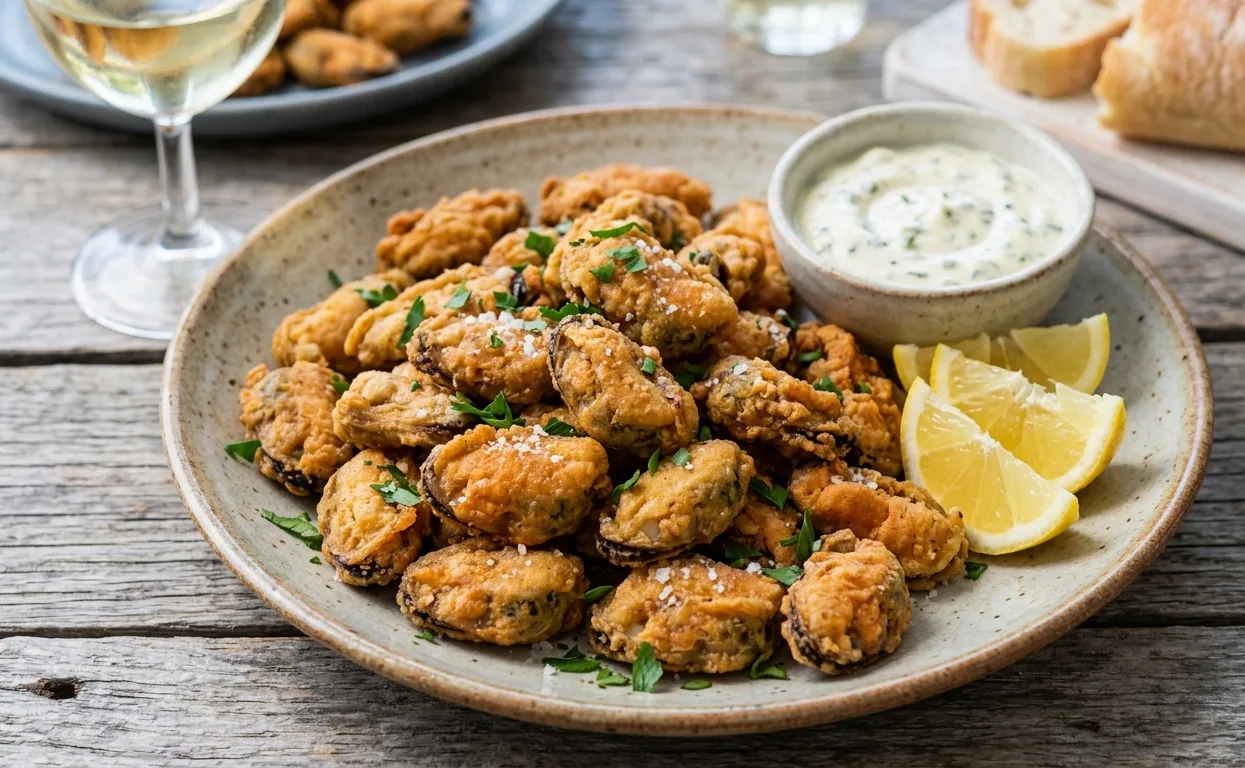
13. Midhje Të Skuqura — Fried Mussels
Butrint lagoon mussels are world-famous for a reason — briny, sweet, and deeply flavored. The classic preparation is a quick fry in olive oil, garlic, and white wine.
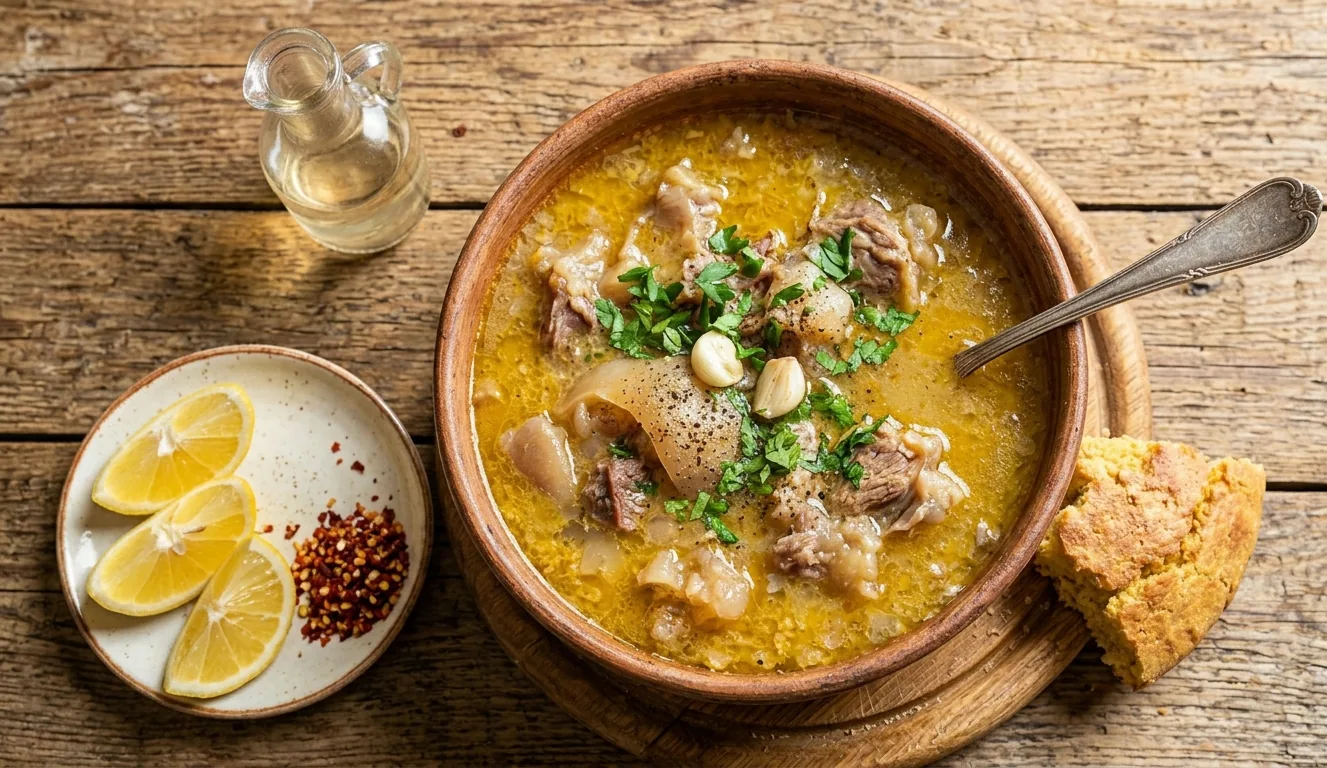
14. Paçe Koke — Not for the Faint of Heart
A hearty soup of slow-simmered lamb's head with vinegar, garlic, and chili flakes. Traditionally eaten for breakfast after a long night. An acquired taste — but a deeply respected one.
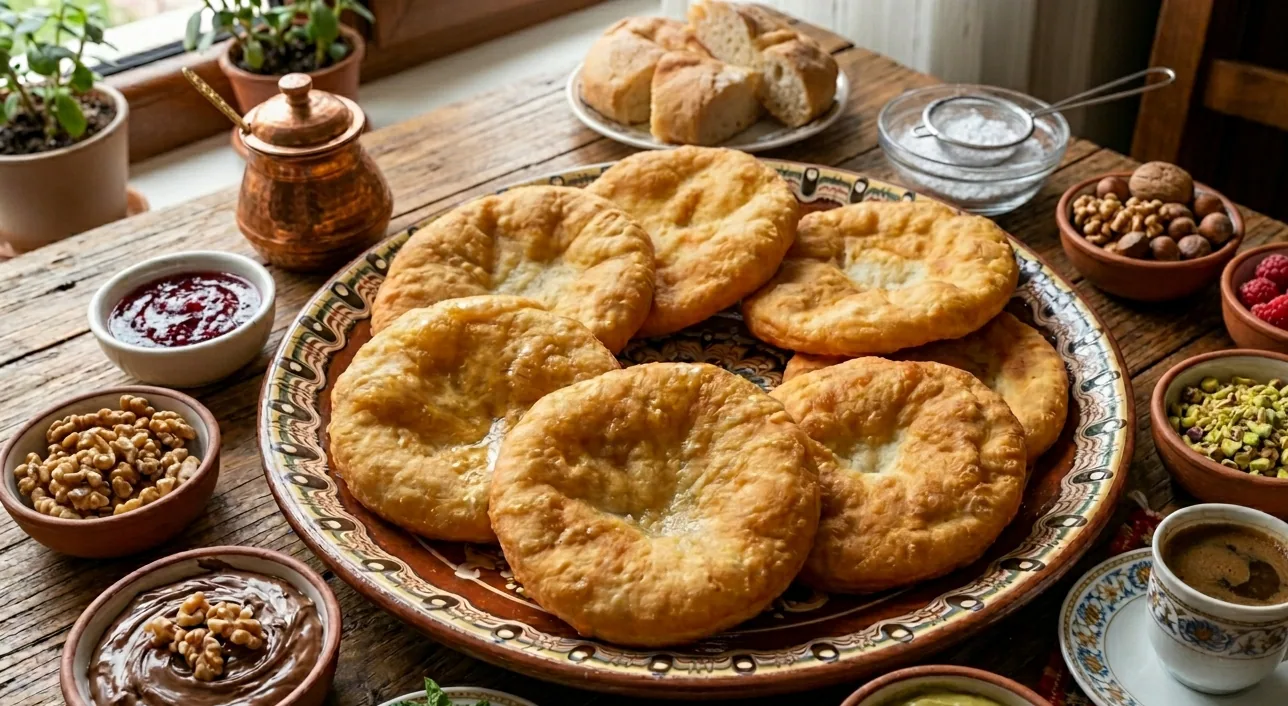
15. Pite — The Countryside Cousin of Byrek
Similar to byrek but thicker and usually baked in a round pan. Common fillings: pumpkin (pite me kungull), leek, or cheese. The Berat region is famous for pumpkin pite.
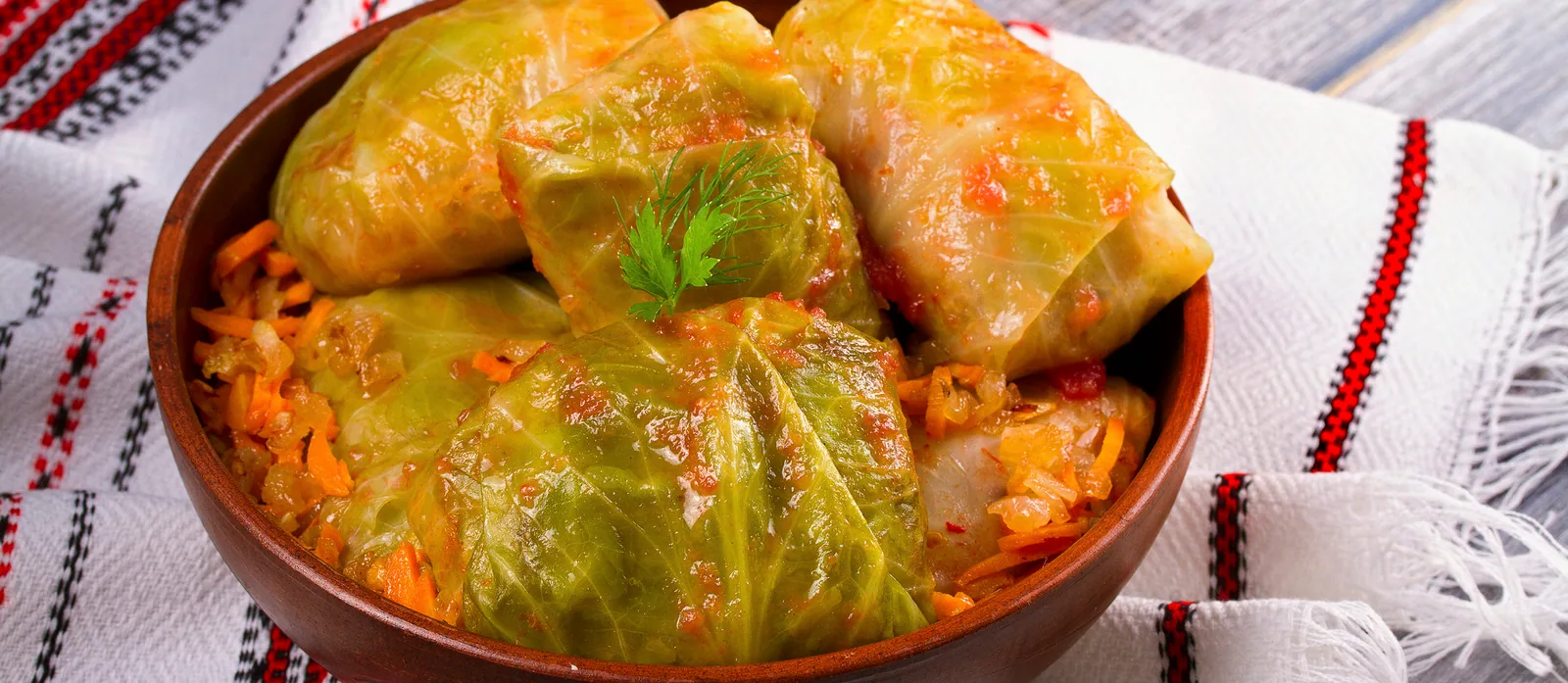
16. Sarma — Cabbage Rolls for Winter
Pickled cabbage leaves rolled around spiced meat and rice, slow-baked until the leaves turn deep golden. A winter comfort classic found across the Balkans.
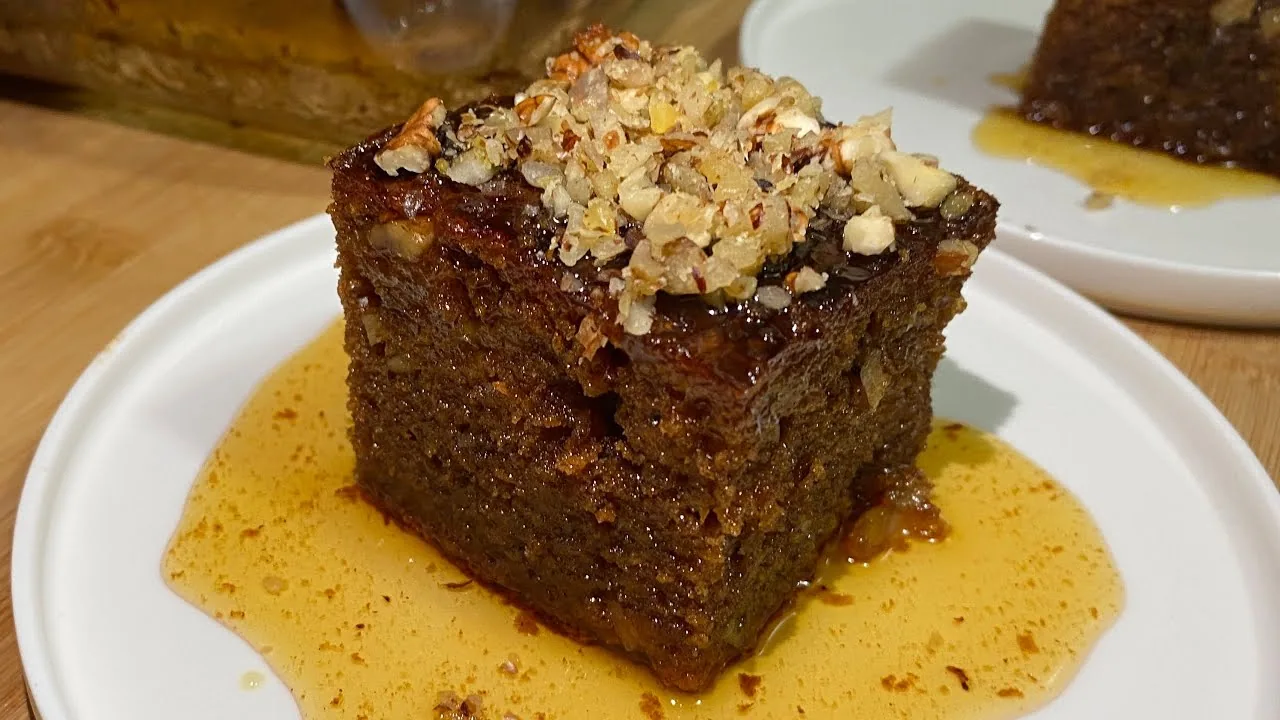
17. Shëndetli — The Sweet You've Never Heard Of
A rustic walnut-and-olive-oil cake soaked in lemon syrup. Dense, fragrant, slightly chewy. Order it with strong Turkish-style coffee.
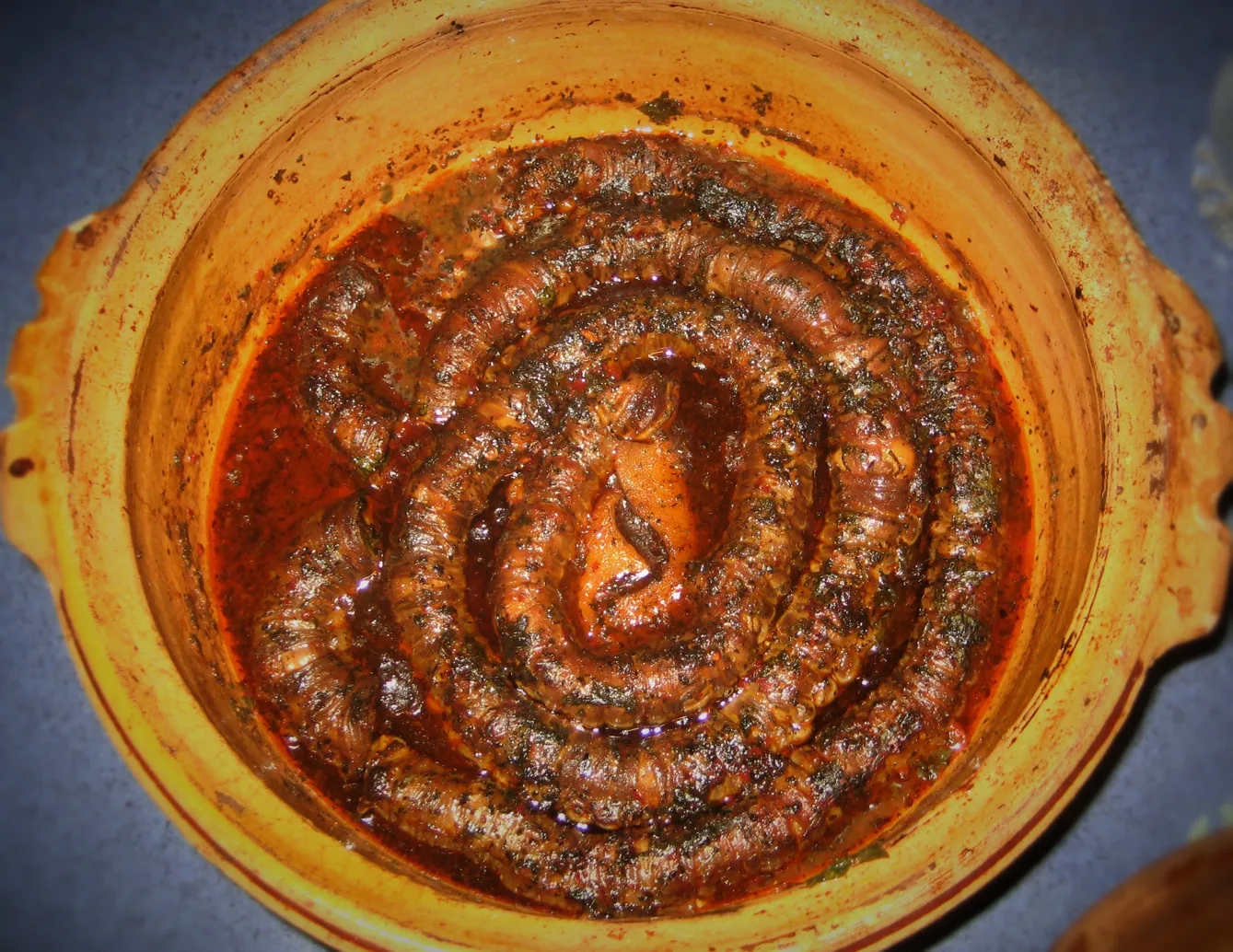
18. Kukurec — Grilled Offal, Done Right
Lamb intestines wrapped around seasoned offal and grilled on a spit. Crispy, savory, beloved by locals, skipped by tourists. Your loss.
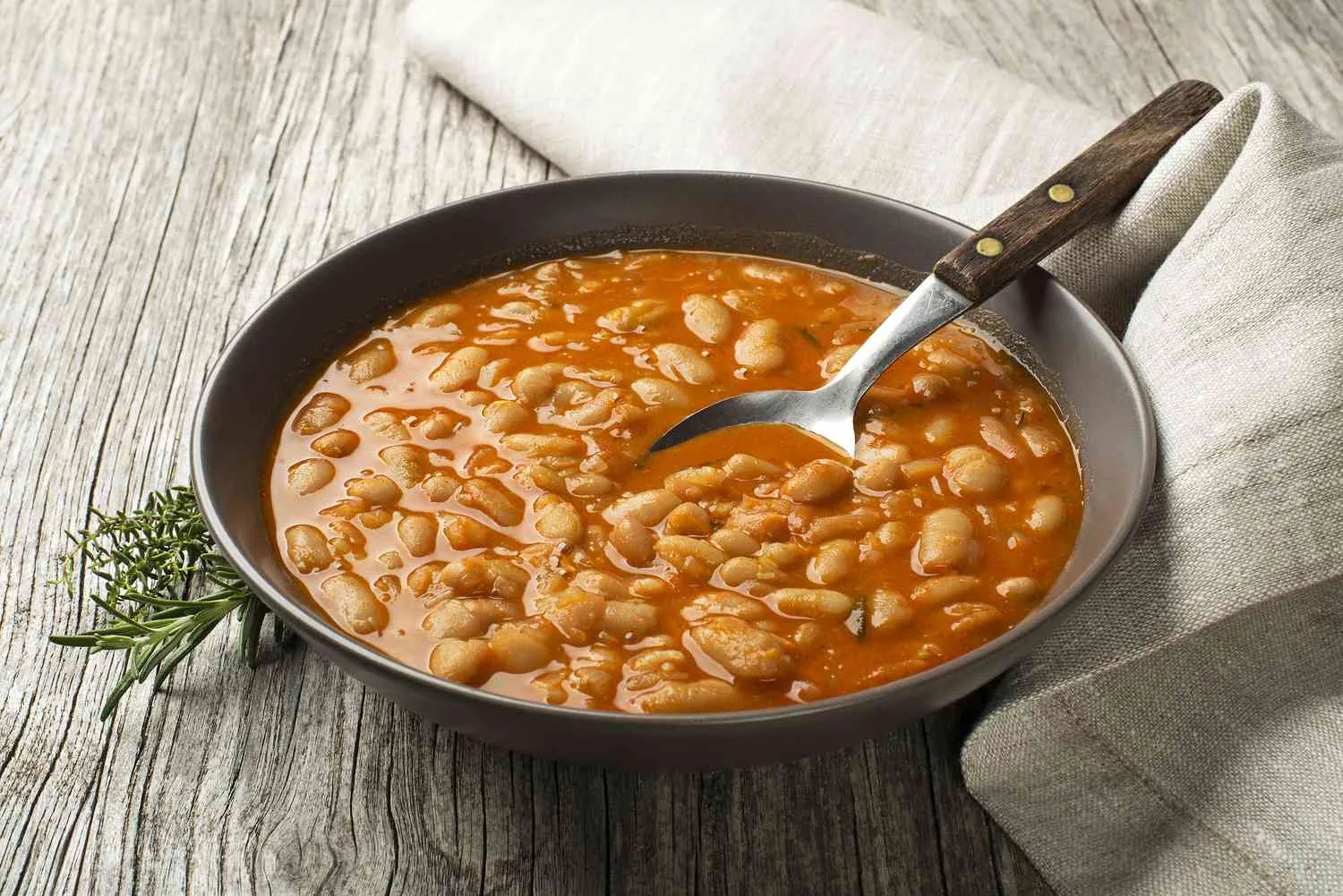
19. Fasule — The Humble Bean Soup
Fasule is a deeply-flavored bean soup cooked with smoked meat, paprika, and a splash of vinegar. Nothing fancy — just honest, warming, and ideal on a cool night in the Albanian Alps.
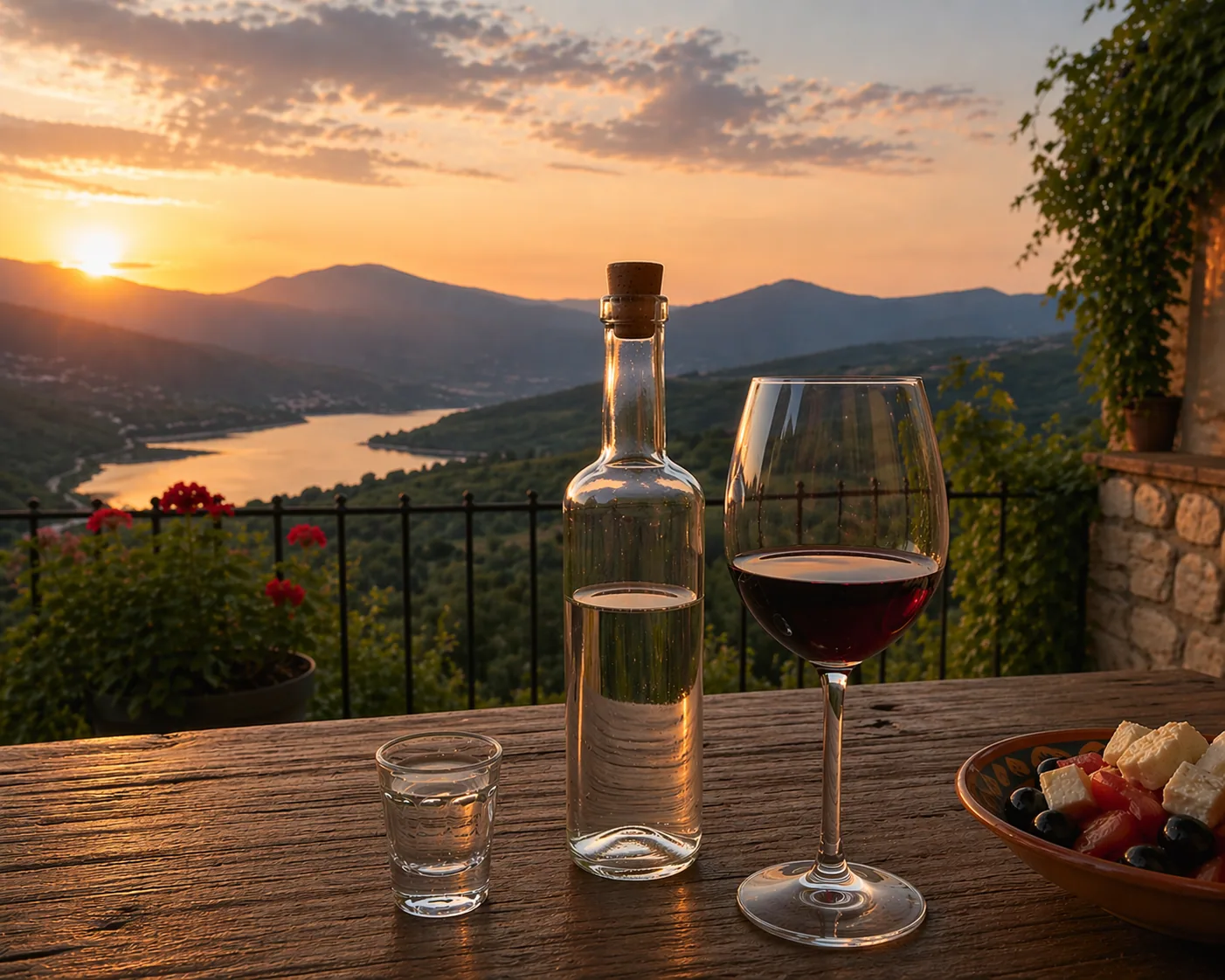
20. Raki & Albanian Wine — The Liquid Conclusion
No Albanian meal ends without raki, a clear grape (or plum) spirit served in small glasses. Refusing the first pour is culturally awkward — accept it, sip slowly, and enjoy the conversation. For context on the tradition, see the Wikipedia article on rakia. Pair your meals with indigenous grape varieties like Kallmet (red) and Shesh i Bardhë (white) — wines you won't find anywhere else in the world.
Where to Eat the Best Albanian Food
Durrës — Seafood Capital of the Adriatic
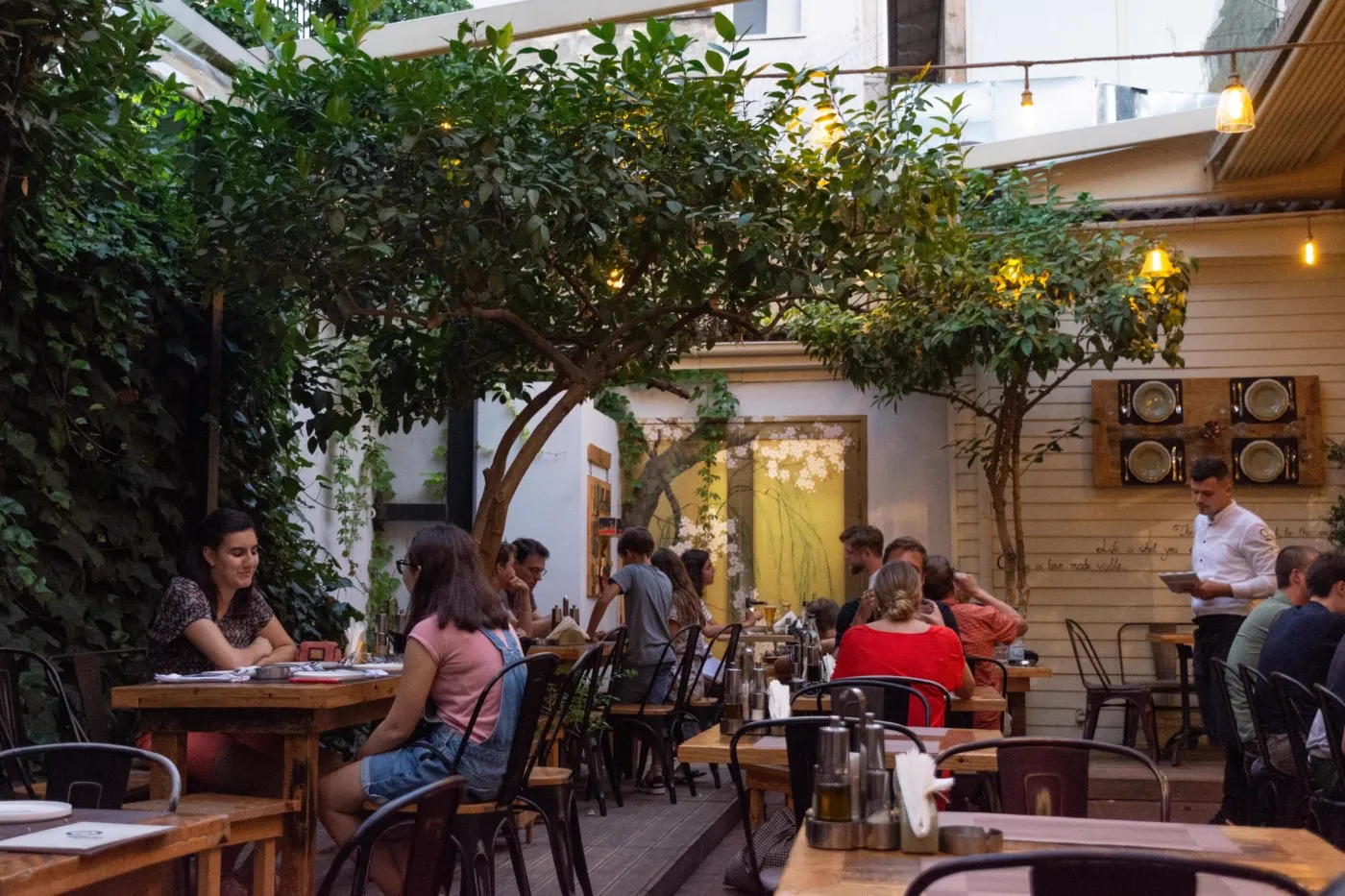
As Albania's oldest continuously inhabited city, Durrës has 2,600 years of practice at feeding people well. The seaside tavernas along the port grill fish so fresh it's still twitching when it lands on the grill. The old-town bakeries make byrek in wood-fired ovens that haven't been rebuilt in 80 years.
Tirana — Where Tradition Meets Innovation
The capital's food scene has exploded in the last five years. Traditional tavernas sit next to modernist restaurants that are reinterpreting Albanian ingredients through a fine-dining lens. Come hungry — most meals stretch to three hours.
Berat — UNESCO Views, Mountain Food
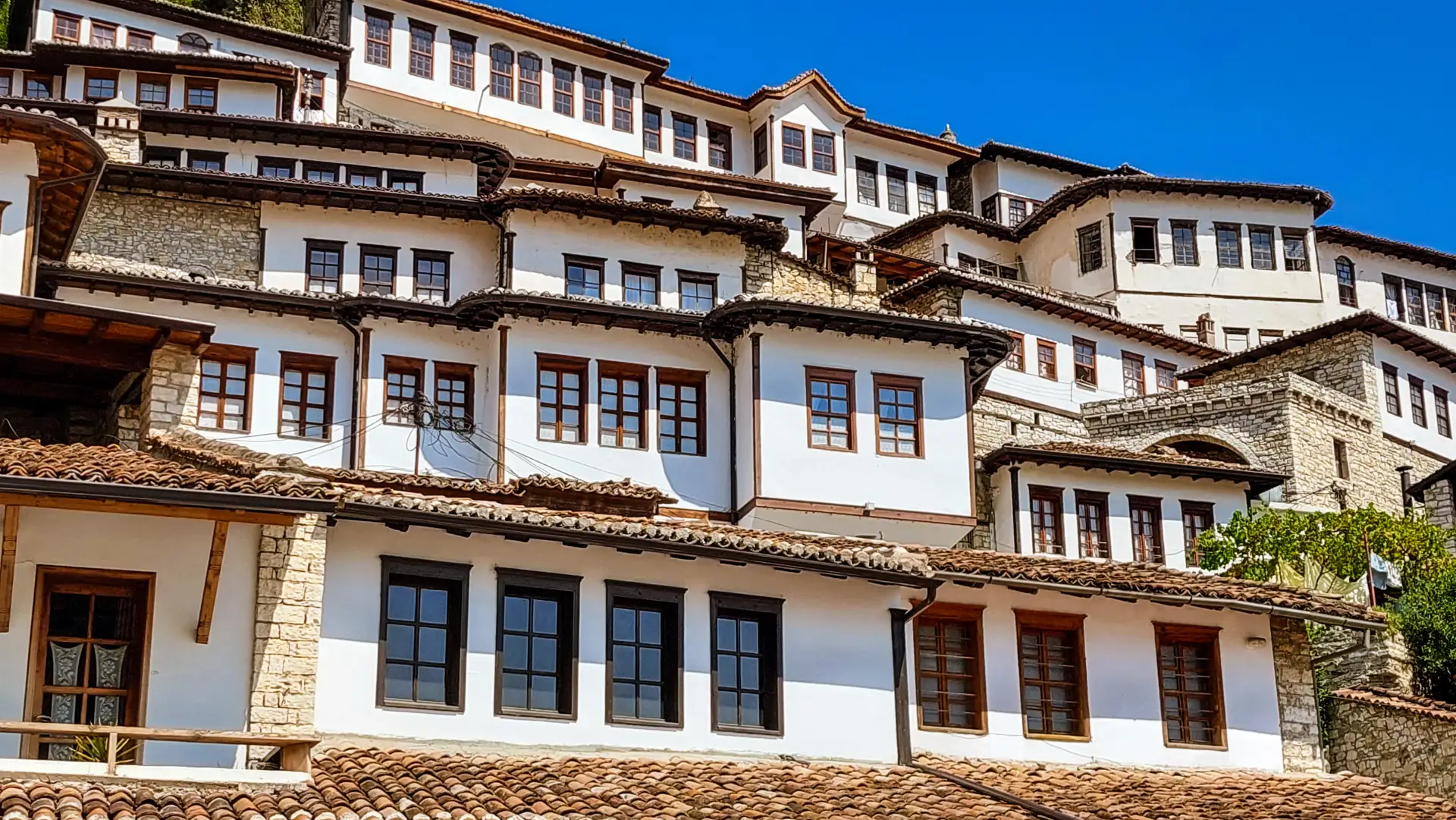
The "City of a Thousand Windows" is also one of Albania's best food towns. Mountain-influenced cooking with slow-cooked lamb, fresh cheese, and pumpkin pite. The wineries in the surrounding hills are producing serious wine.
The Albanian Riviera — Sea-to-Table, Village Style
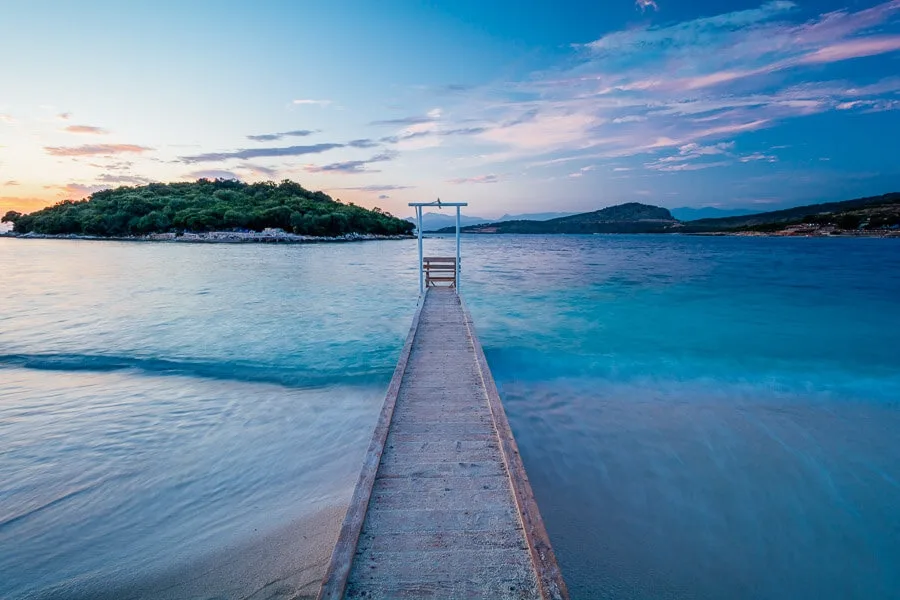
Himarë, Dhërmi, and Ksamil all have small family-run restaurants where lunch is whatever the boats brought in that morning. No menus. No rush. Our first-timer's guide to the Albanian Riviera covers the best spots.
How Much Does Food Cost in Albania?
One of the joys of eating in Albania: quality-to-price ratio is absurd. A full lunch of grilled fish, a mixed salad, fresh bread, and a glass of local wine in a seaside taverna runs about 1,500–2,500 lekë (roughly €15–25). A single byrek from a bakery costs 100 lekë (€1). An evening three-course meal with wine in a top Tirana restaurant rarely exceeds €40 per person. If you're watching your budget, Albania punches well above its weight.
Taste Albania the Right Way — Our Guided Food Tours
Reading about Albanian food is one thing. Tasting it with a local who knows every grandmother's recipe is another. Our small-group food and wine tours take you beyond the tourist trail and straight into the kitchens that matter.
We recommend two experiences:
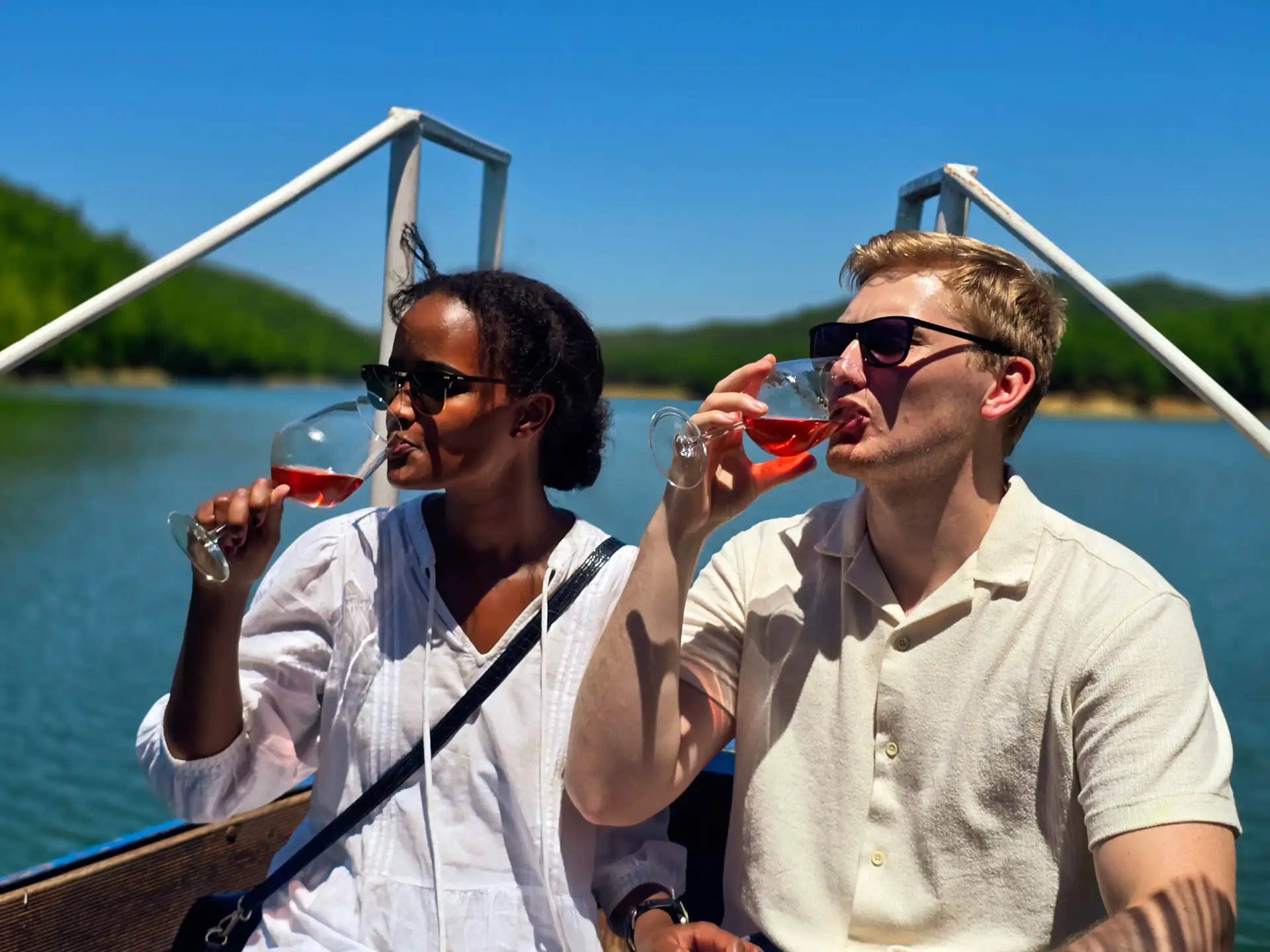
- Berat Wine & Food Day Trip — a full day tasting mountain-style pite, slow-cooked lamb, and indigenous grape varieties in the UNESCO-listed city. View Berat tours.
- Durrës Seafood Lunch Cruise — a half-day boat trip along the Adriatic with a grilled seafood lunch served on deck. Browse all tours.
Both tours include transport, guide, and all tastings. Book your Albanian food experience here — no payment is required until we confirm availability.
Frequently Asked Questions
What food is Albania famous for?
Byrek, tavë kosi, fërgesë, and grilled seafood are Albania's most famous dishes. Each region has its own specialty — byrek is universal, tavë kosi is considered the national dish, fërgesë is Tirana's signature, and fresh grilled fish defines the Adriatic and Ionian coasts.
Is Albanian food similar to Greek or Turkish food?
It shares roots with both. The Ottoman influence is audible in dishes like baklava, qofte, and pilaf. The Mediterranean base — olive oil, tomatoes, wild herbs, seafood — overlaps heavily with Greek and southern Italian cooking. But Albanian ingredients (indigenous cheeses, wild herbs, specific wine grapes) and slower, yogurt-forward preparations give it a distinct identity.
What is the national dish of Albania?
Tavë kosi — slow-baked lamb with yogurt, eggs, rice, and garlic. Every region makes a slight variation, and every grandmother insists hers is correct.
How do you say "cheers" in Albanian?
Gëzuar! (pronounced ger-ZOO-ar). Raise your raki glass, make eye contact, and commit to finishing what's in the glass.
Final Thoughts
Albanian cuisine is at the exact right moment: mature enough to be comfortable, raw enough to feel like a discovery. You won't find it packaged for tourists — you'll find it served in homes, beach shacks, and mountain tavernas exactly the way it's been served for generations.
Come hungry. Eat slowly. Accept the raki. And if you want a shortcut to the good stuff, let us guide you — we've spent years learning which grandmothers are still making byrek the old way, which fishermen land the sweetest sea bass, and which winemakers are reviving indigenous grapes no one else grows.
Ready to plan your trip? Explore our destinations across Albania or start with our classic 10 Things You Didn't Know About Durrës — the perfect companion read before you land.