Krujë
The Fortress of Skanderbeg — where Albania's national hero defied an empire from a mountaintop castle
Albania's Most Iconic Fortress Town
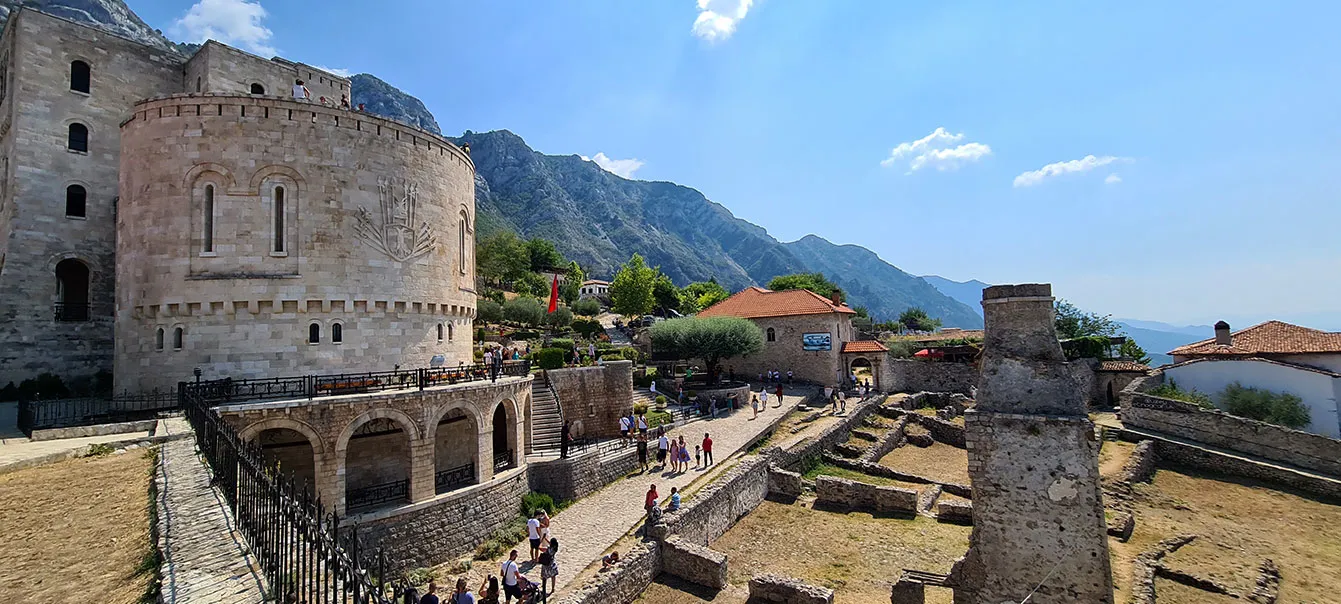
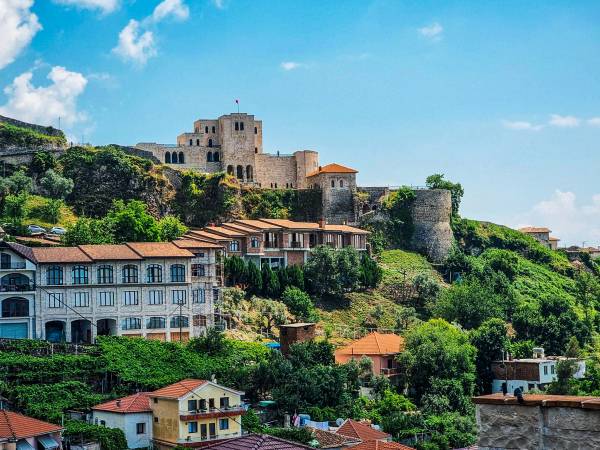
Krujë is more than a destination — it is the spiritual heart of Albanian identity. Perched on a rocky ridge at 600 metres, this ancient fortress town is where Gjergj Kastrioti Skanderbeg, the national hero, held off the might of the Ottoman Empire for twenty-five extraordinary years.
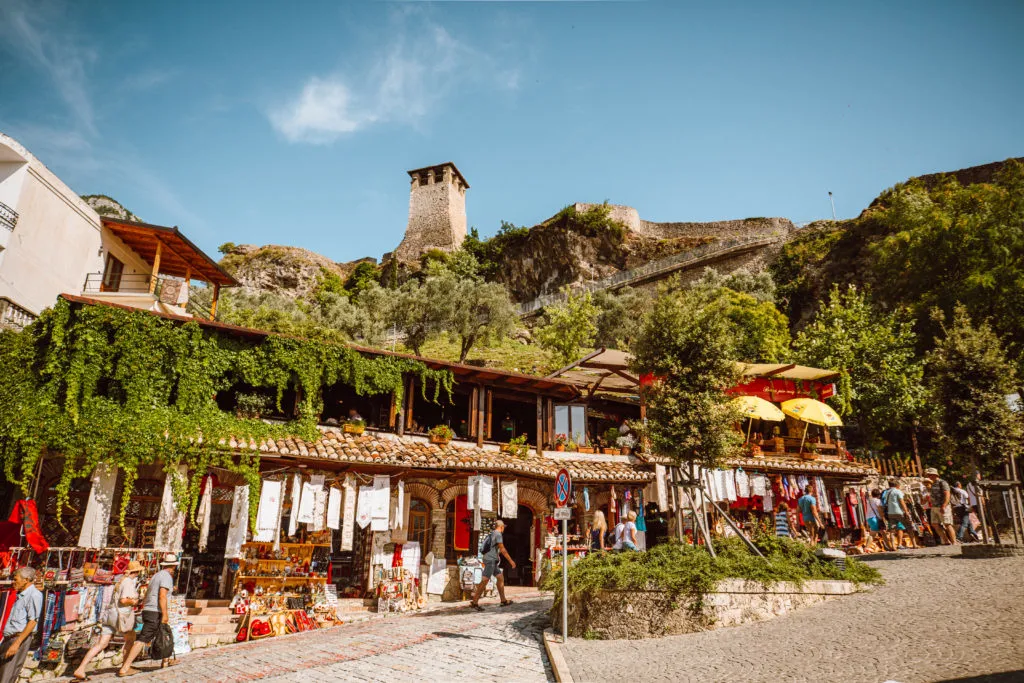
The castle, museum, and legendary Old Bazaar make Krujë one of Albania's most visited day-trip destinations. The bazaar alone — a covered cobblestone street of artisan workshops selling filigree silver, handwoven textiles, and mountain herbs — has been operating continuously for centuries and remains the country's most atmospheric market.
Just 50 minutes from Durrës and 40 minutes from Tirana, Krujë is a perfect half-day or full-day trip — combining dramatic mountain scenery, powerful history, and some of the best traditional craftsmanship in the Balkans.
A Fortress That Shaped a Nation
From a Byzantine hilltop settlement to the legendary stronghold of Skanderbeg — Krujë's history is the story of Albanian resistance, resilience, and national identity.
1190First Records
First mentioned in Byzantine chronicles as a small fortified settlement on a rocky ridge. The castle controlled a key pass between the coastal plains and the interior, making it a strategic point for trade and military control in medieval Albania.
 1443–1468
Skanderbeg's Fortress
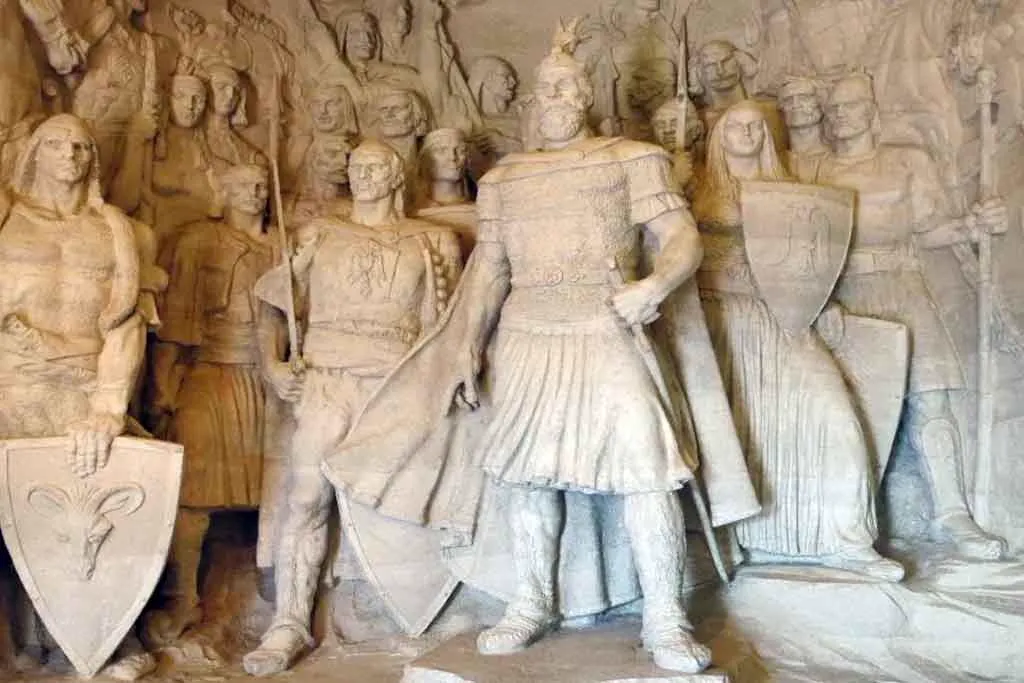
Gjergj Kastrioti Skanderbeg, Albania's national hero, made Krujë his base for a 25-year resistance against the Ottoman Empire. He defeated the Ottomans in three major sieges (1450, 1466, 1467), making Krujë a symbol of Albanian freedom. The Pope called him "Athleta Christi" — Champion of Christ.
 1478
1478Ottoman Conquest
After Skanderbeg's death in 1468, the Ottomans finally captured Krujë in 1478 after a prolonged siege. The fortress was partially destroyed, marking the end of organised Albanian resistance and the beginning of nearly five centuries of Ottoman rule.
1478–1912Ottoman Period
Under Ottoman rule, Krujë developed as a market town. The Old Bazaar that survives today dates from this period — a covered cobblestone market that has operated continuously for centuries, selling handmade crafts, textiles, and local produce to travellers and locals alike.
1982Skanderbeg Museum
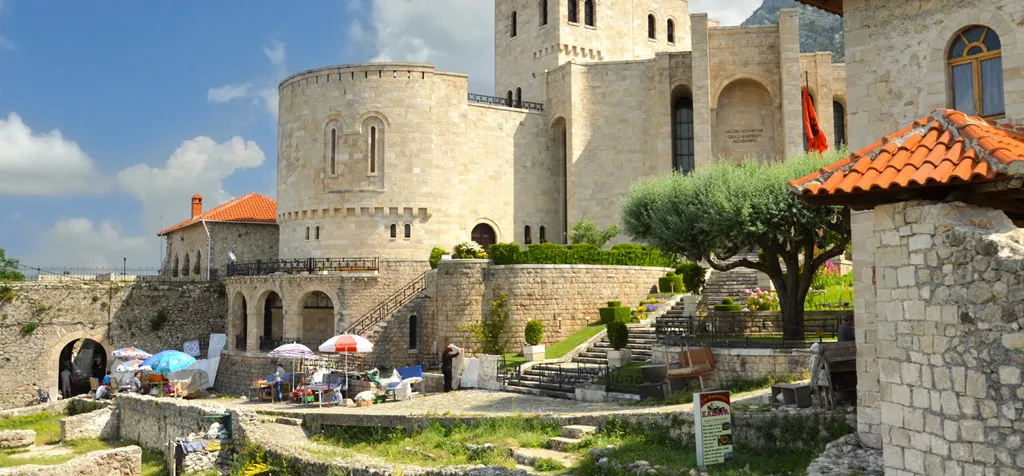
The iconic castle museum was designed by Albanian architects Pranvera Hoxha and Pirro Vaso in a dramatic brutalist style meant to evoke a medieval fortress. It houses Skanderbeg's sword (replica), armour, and documents from the resistance — becoming a pilgrimage site for Albanians.
PresentNational Pilgrimage Site
Krujë is Albania's most symbolically important town, visited by nearly every Albanian at least once. The bazaar, castle, and museum make it one of the country's top day-trip destinations — a place where history, identity, and breathtaking mountain scenery converge.
Landmarks & Attractions
From the legendary castle and Skanderbeg Museum to the centuries-old bazaar and Bektashi shrine — Krujë packs extraordinary history into a compact hilltop setting.
Krujë Castle
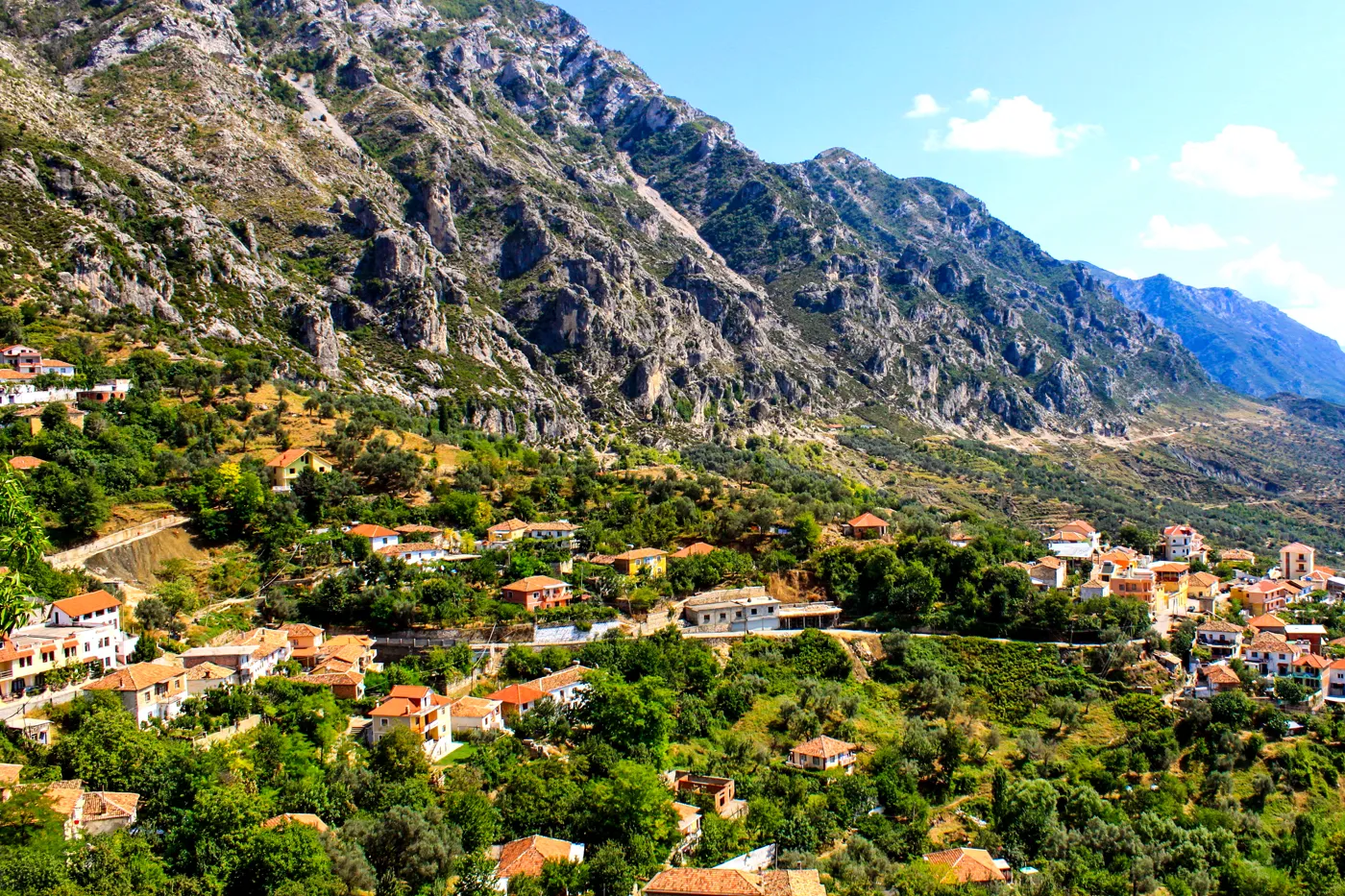
Perched on a dramatic rocky ridge at 600m, the castle offers sweeping views over the plain to the Adriatic. Inside the walls: the Skanderbeg Museum, a small ethnographic museum, a restored hammam, and a beautiful tekke (Bektashi shrine).
Skanderbeg Museum
A striking modernist building inside the castle designed to resemble a medieval fortress. The museum chronicles Skanderbeg's military campaigns with maps, weapons, documents, and replicas. The central hall is dramatic and awe-inspiring.
Old Bazaar
Albania's most atmospheric bazaar — a covered cobblestone street lined with artisan shops selling handmade goods: filigree silver, traditional textiles, carved wood, antique copperware, olive oil, and mountain tea. Operating continuously for centuries.
Bektashi Tekke (Dollma Tekke)
A beautifully restored Sufi shrine inside the castle walls, dating from the 18th century. The tranquil garden and ornate interior offer a peaceful contrast to the fortress — a place of quiet reflection amid the drama of Skanderbeg's story.
Ethnographic Museum
Housed in a traditional Ottoman house within the castle, showcasing traditional Krujë life with original furnishings, costumes, and household items. A window into daily life in a medieval Albanian mountain town.
Sarisalltiku Viewpoint
From the castle walls, a panoramic view stretching from Mount Sarisalltik across the plain of Krujë all the way to the Adriatic coastline at Durrës on clear days. One of the most spectacular viewpoints in all of Albania.
Bazaar & Crafts
Krujë's Old Bazaar is Albania's most iconic market — a covered cobblestone street where artisans have been selling handmade crafts for centuries. From filigree silver to mountain tea, every stall tells a story of tradition and craftsmanship.
Filigree Silver
Krujë's artisans still practice traditional Ottoman silverwork, crafting intricate filigree jewellery and decorative pieces by hand — a tradition passed down through generations in the Old Bazaar workshops.
Mountain Tea & Herbs
Wild-harvested teas from the surrounding mountains, including the famous Albanian mountain tea (çaj mali). Dried herbs, sage, and oregano are sold in fragrant bundles throughout the bazaar.
Handwoven Textiles
Traditional kilim rugs and embroidered tablecloths made on wooden looms using patterns that have remained unchanged for centuries. Each piece is unique and takes weeks to complete.
Antique Copperware
Hammered copper coffee pots, trays, and decorative items — many genuinely old, others faithfully reproduced by local craftsmen using traditional techniques handed down through Ottoman-era guilds.
Olive Oil & Honey
Locally pressed olive oil from the groves below the castle and mountain wildflower honey from beekeepers in the surrounding hills. Pure, unprocessed, and among the best in Albania.
Food & Cuisine
Mountain comfort food, clay-pot stews, and wild-harvested tea — Krujë's cuisine reflects centuries of highland tradition and Ottoman influence.
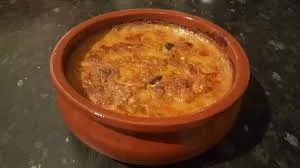
Tavë Dheu
Clay-pot lamb and vegetable stew, Krujë's signature dish. Slow-cooked in an earthenware pot until the meat falls apart, with peppers, tomatoes, and local herbs — hearty mountain cooking at its finest.
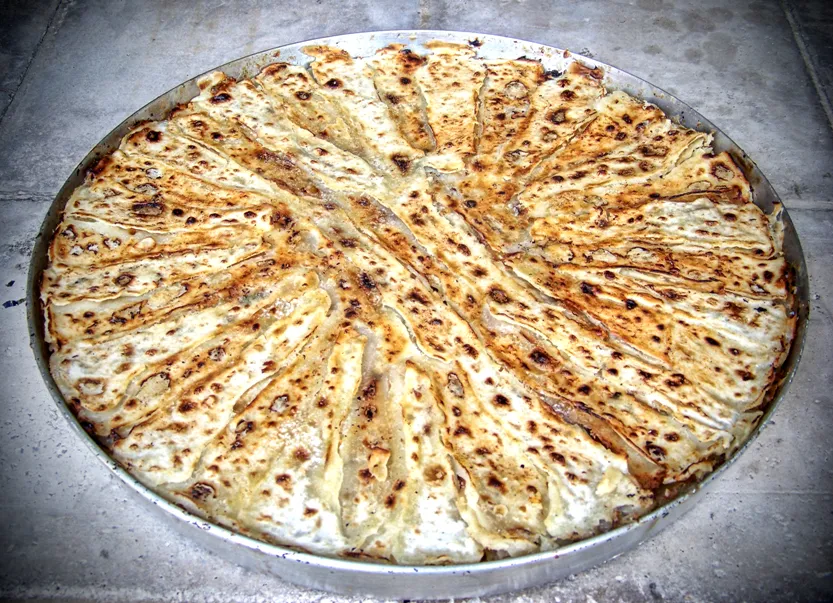
Flija
Multi-layered crepe-like pastry cooked under embers, a northern Albanian specialty. Each layer is brushed with cream and butter before the next is added — the result is rich, flaky, and utterly addictive.
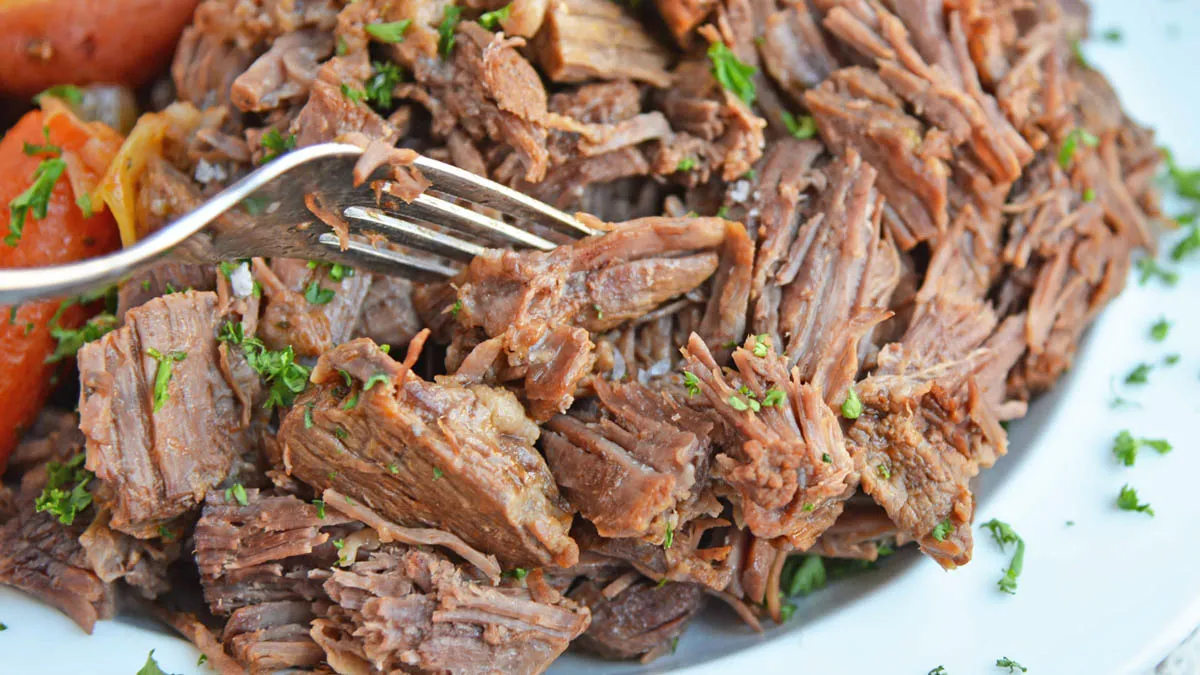
Mish i Thatë
Dried aged meat, a mountain tradition dating back centuries. Lamb or goat is salted and air-dried in the cool mountain air, then served thinly sliced as a starter or cooked into stews during winter months.
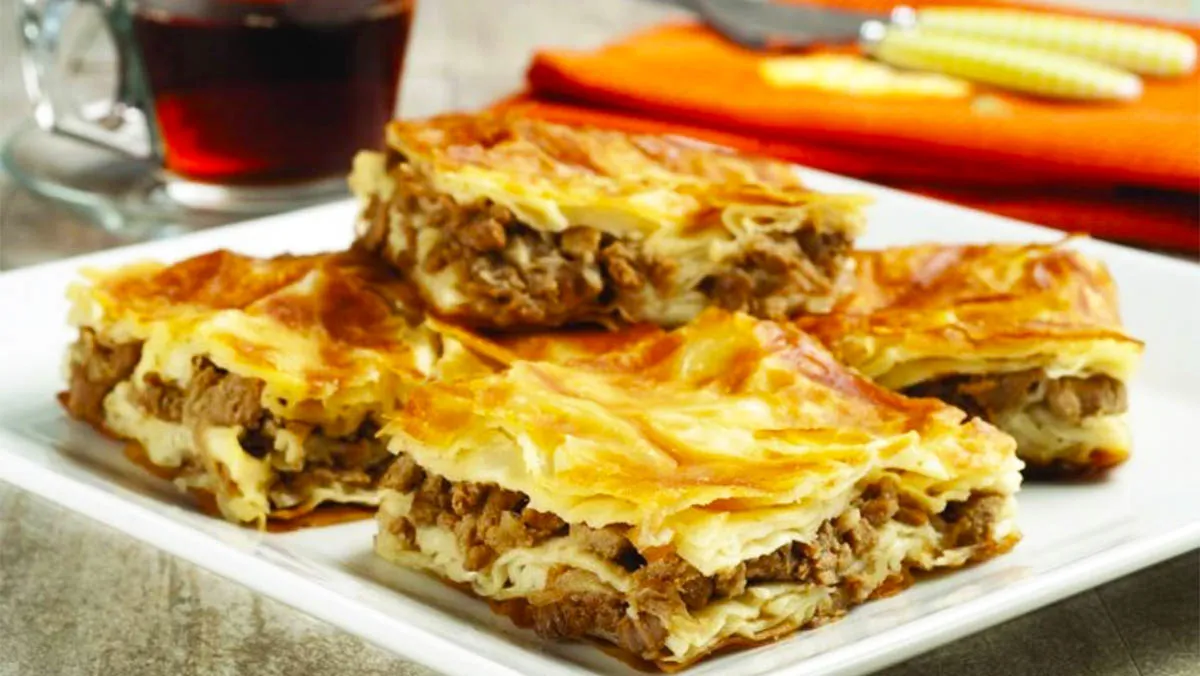
Byrek me Mishtë
Byrek with corn bread, a local variation unique to the Krujë region. The combination of flaky filo pastry and dense, golden cornbread creates a satisfying contrast of textures and flavours.
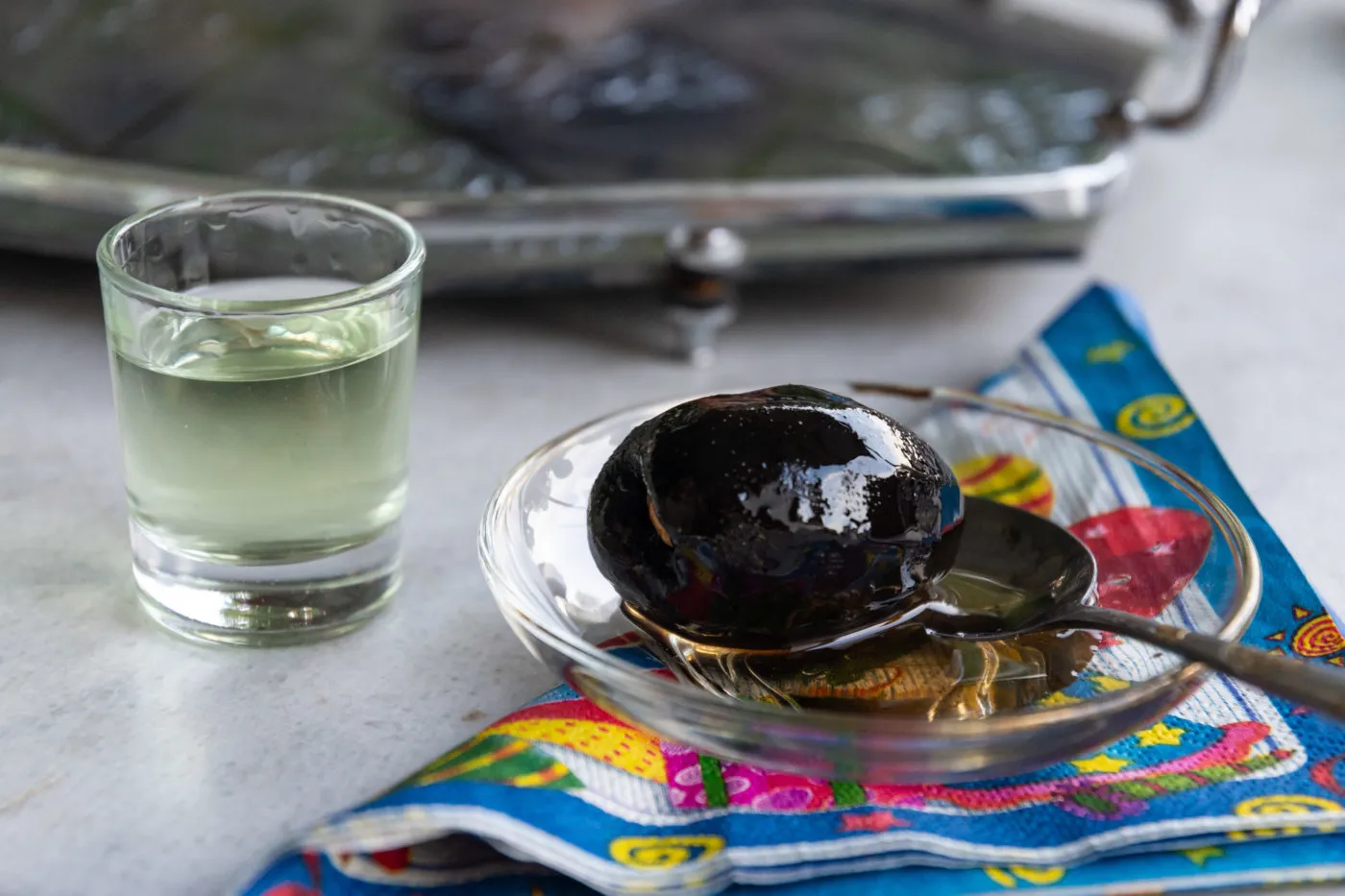
Raki with Honey
Local raki sweetened with mountain honey — a warming digestif served after meals in Krujë. The combination of sharp grape spirit and floral honey is uniquely Albanian and impossibly smooth.
Best Time to Visit Krujë
Krujë is a year-round destination, but spring and autumn offer the most comfortable temperatures and the clearest views from the castle walls.
Spring
April – May14–24°CThe perfect time to visit. Comfortable temperatures, wildflowers on the hillsides, and clear views from the castle. Ideal for exploring the bazaar and hiking around the fortress.
Summer
June – August28–35°CHot and busy with both Albanian and international visitors. The castle can be crowded at midday. Visit early morning or late afternoon for the best experience and cooler temperatures.
Autumn
September – October16–26°CBeautiful golden light over the mountains. Fewer tourists, pleasant temperatures, and harvest season in the surrounding countryside. The bazaar is at its most atmospheric.
Winter
November – March2–10°CQuiet and atmospheric. The castle can be shrouded in mist, creating a dramatic medieval atmosphere. Snow sometimes dusts the upper ridges. Very few tourists — you may have the museum to yourself.
How to Reach Krujë
Krujë is just 50 minutes from Durrës by car via the modern highway, making it a perfect half-day or full-day trip. We offer private transfers with knowledgeable local drivers.
From Tirana, Krujë is just 40 minutes by car. Regular public minibuses (furgons) run throughout the day from Tirana's bus station for under €3.
Krujë is an ideal combination day trip — pair it with a visit to Tirana or explore the Skanderbeg trail through the surrounding mountains. The winding road up to the castle passes through olive groves and offers increasingly dramatic views of the plain below.
Tours in Krujë
Walk through Skanderbeg's fortress, browse the ancient bazaar, and taste mountain cuisine — all with born-and-raised local guides.
Ready to Explore Krujë?
Whether you want a guided tour of Skanderbeg's fortress, a stroll through the ancient bazaar, or a taste of mountain cuisine — we'll make it happen.