Dhërmi
The Riviera's Wild Beach — where turquoise waters meet ancient olive groves and a hilltop stone village
The Albanian Riviera's Most Stunning Stretch
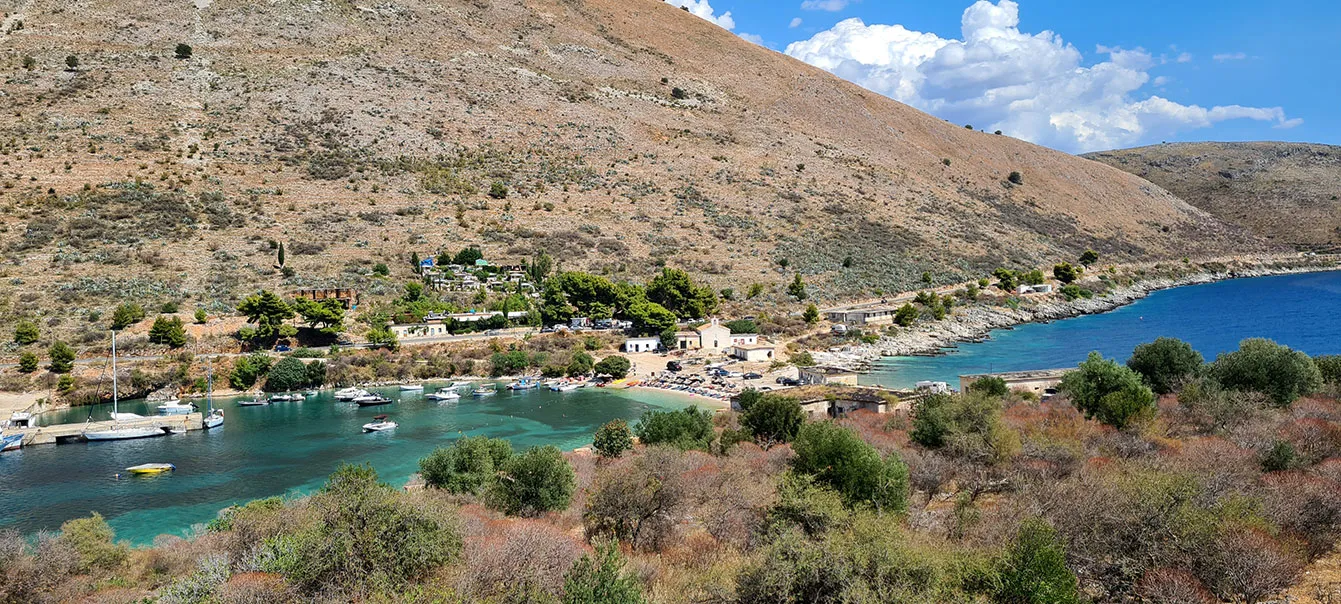
Dhërmi is one of the Albanian Riviera's most stunning stretches of coastline — a place where turquoise Ionian waters lap against white-pebble beaches, ancient olive groves tumble down mountainsides, and a Byzantine-era stone village watches over it all from the hilltop above.
Unlike the overdeveloped coasts of Greece and Croatia, Dhërmi has retained a wild, unspoilt beauty that feels increasingly rare in the Mediterranean. The beaches are spectacular, the water is impossibly clear, and the pace of life moves to the rhythm of the waves rather than the clock.
Located 3.5 hours from Durrës via the dramatic Llogara Pass — one of the most scenic drives in the Balkans — Dhërmi rewards the journey with some of the best swimming, most beautiful coastline, and finest seafood on the Albanian Riviera.
From Ancient Settlement to Riviera Gem
Dhërmi's story stretches from ancient Greek-speaking coastal communities through Byzantine fortification and Ottoman autonomy to its modern reinvention as one of the Mediterranean's last unspoilt beach destinations.
AncientGreek-Speaking Coastal Settlement
Dhërmi's origins trace back to antiquity as a Greek-speaking coastal settlement with deep maritime traditions. The community lived off the sea and the olive groves that still blanket the hillsides today. This stretch of the Ionian coast was known to ancient mariners, and the natural harbour provided shelter for fishing boats and small trading vessels moving between Corfu and the mainland.
ByzantineThe Hilltop Village Takes Shape
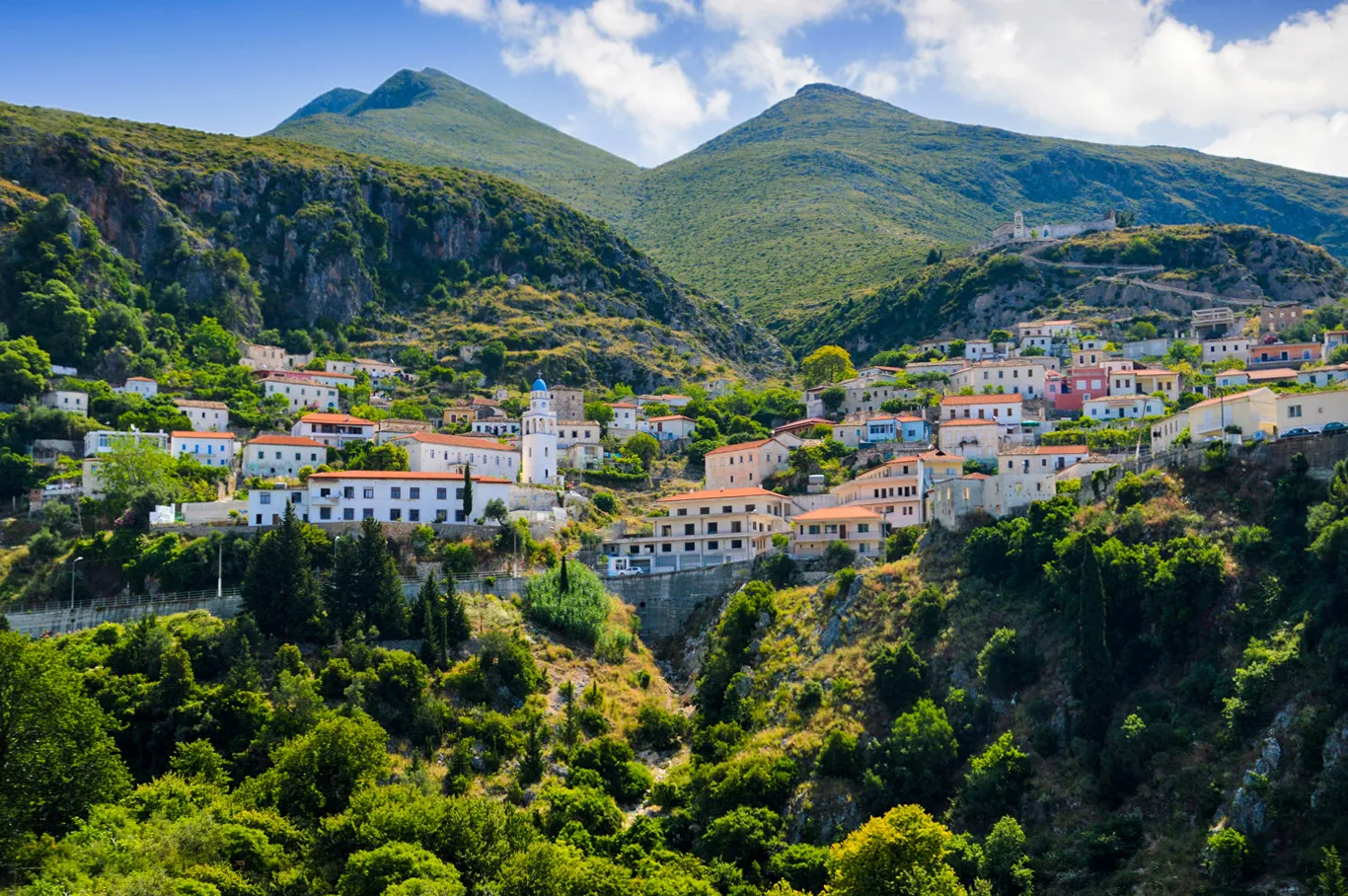
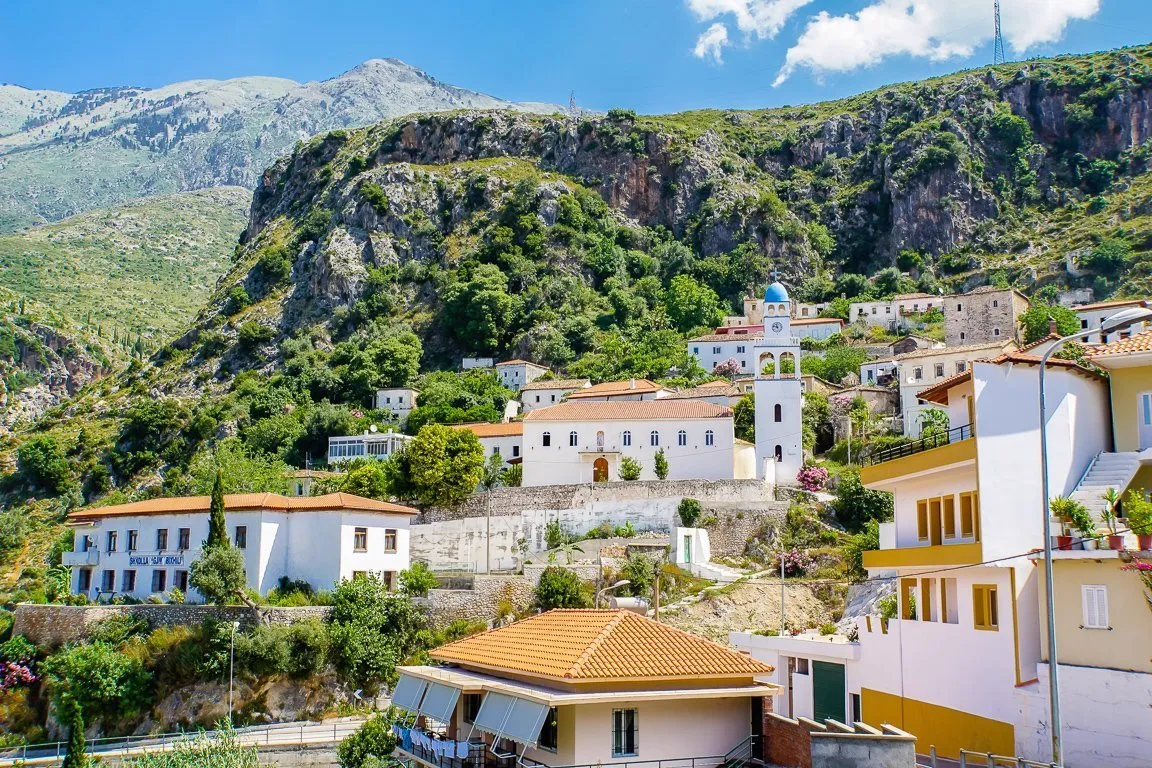
During the Byzantine period, the hilltop village of Dhërmi was established in its present form. Stone houses and small churches were built along narrow alleys perched high above the coast — a defensive position against pirate raids. The village's distinctive architecture, with thick stone walls and slate roofs, dates from this era and gives Dhërmi a character quite unlike the modern beach resorts below.
OttomanLocal Autonomy Preserved
Under Ottoman rule, Dhërmi maintained a remarkable degree of local autonomy and preserved its distinct culture. The Greek-speaking community continued its traditions, tending olive groves and fishing the Ionian waters. The remoteness of the coast and the rugged terrain of the Ceraunian Mountains behind the village meant that Ottoman authority was felt less heavily here than in the lowland towns.
CommunistRestricted Beaches, Preserved Village
During the communist period under Enver Hoxha's regime, Dhërmi's beaches were restricted — the coastline was considered a sensitive border zone, and access was tightly controlled. Military bunkers dotted the shoreline. Ironically, this enforced isolation preserved both the pristine quality of the beaches and the character of the hilltop village, which remained virtually unchanged while Albania's cities were transformed by concrete.
2000sDiscovered by Backpackers
After the fall of communism and the turbulent 1990s, word began to spread among backpackers and adventurous travellers about Albania's pristine southern coastline. Dhërmi was among the first beaches to gain a reputation — its crystal-clear water, dramatic mountain backdrop, and complete lack of development made it feel like a Mediterranean secret. Basic guesthouses and beach bars began to appear, and a bohemian travel scene took root.
 Present
The Riviera's Crown Jewel
Today Dhërmi is one of Albania's most desirable beach destinations, drawing visitors from across Europe with its turquoise water, white-pebble beaches, and laid-back Riviera atmosphere. Boutique hotels and stylish beach bars line the coast, yet the development remains far more restrained than on the Spanish or Greek coasts. The stone village above the beach adds cultural depth to the coastal beauty — a reminder that Dhërmi is far more than just a pretty stretch of sand.
Landmarks & Attractions
From pristine beaches and hidden sea caves to a Byzantine hilltop village and Ali Pasha's coastal fortress — Dhërmi and its surroundings offer far more than just sunbathing.
Dhërmi Beach
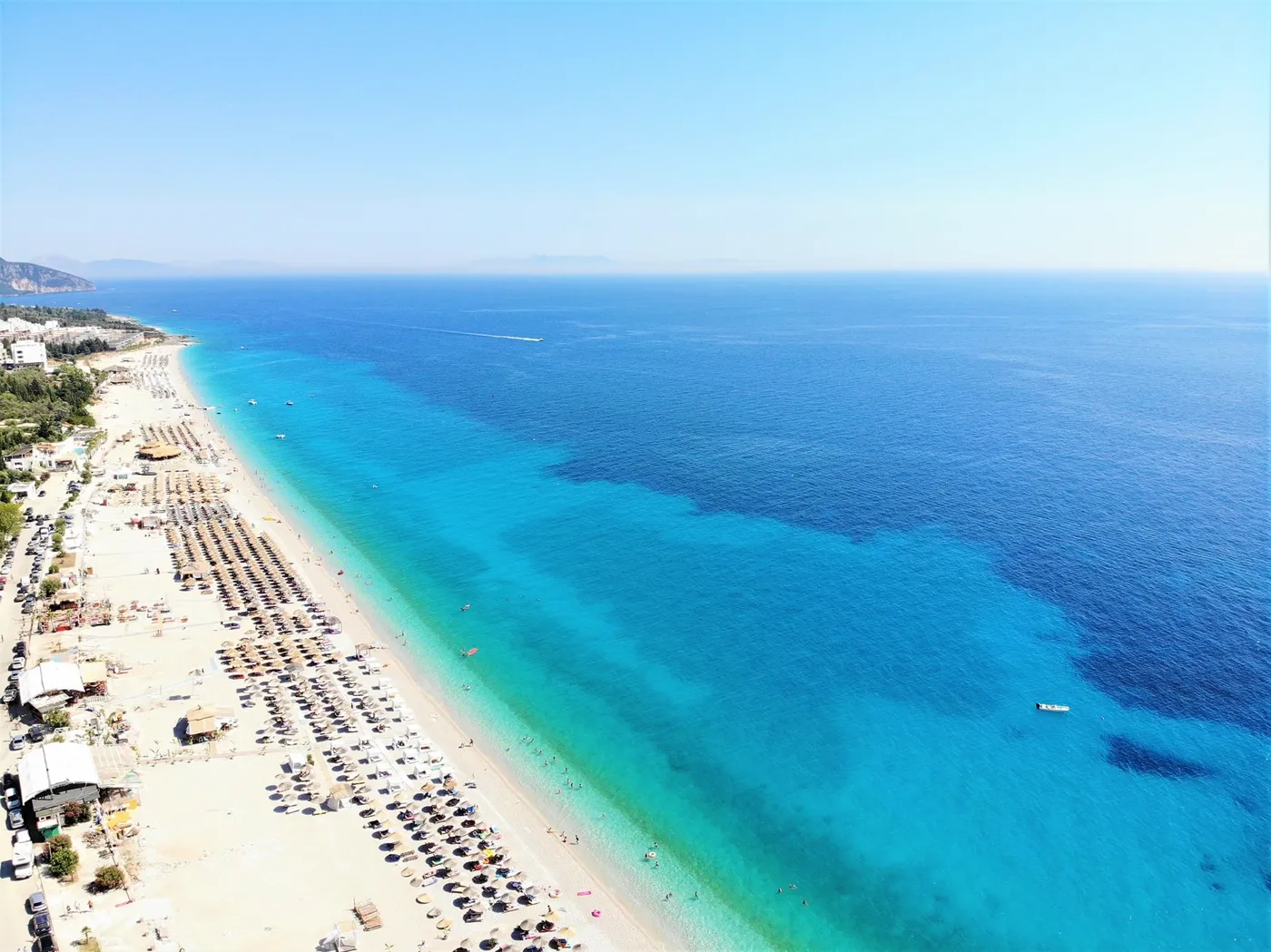
A long white-pebble beach with turquoise water backed by ancient olive groves and the dramatic Ceraunian Mountains. The main beach stretches for nearly 2 kilometres and offers a mix of organised beach bars and quieter stretches where you can lay your towel under a tamarisk tree. The water clarity here rivals anything in Greece or Croatia.
Drymades Beach
Just north of Dhërmi, Drymades has a wilder, more bohemian atmosphere with boutique beach bars, driftwood furniture, and a younger crowd. The beach is backed by pine-covered cliffs and feels more secluded than the main Dhërmi strand. Sunset sessions with cocktails and low-key DJ sets have become a Drymades tradition.
Hilltop Village
The old stone village of Dhërmi sits perched dramatically above the coast, connected to the beach by a winding road. Narrow alleys thread between Byzantine-era stone houses, past small churches with faded frescoes, and through archways framing stunning views of the Ionian Sea. It's a world apart from the beach scene below — quiet, atmospheric, and deeply historic.
Pirate's Cave
A spectacular sea cave accessible by boat from Dhërmi beach, where emerald-green water glows inside a natural rock chamber. Local boat operators run trips throughout the summer, and the cave is large enough to swim into. Legend has it that pirates once used the cave to hide treasure — today, the treasure is the unforgettable colour of the water inside.
Porto Palermo
About 30 minutes south of Dhërmi, Ali Pasha's fortress sits on a small peninsula jutting into a perfectly sheltered bay. Built in the early 19th century by the powerful Ottoman-Albanian ruler Ali Pasha of Ioannina, the triangular fortress is remarkably well-preserved. The bay itself is one of the most beautiful natural harbours on the Albanian coast — crystal-clear water surrounded by wild, undeveloped hills.
Beaches to Discover
Dhërmi sits at the heart of the Albanian Riviera, surrounded by some of the most beautiful beaches in the Mediterranean. From long organised strands to hidden coves accessible only by boat or hiking trail, every beach has its own character.
Dhërmi Beach
The main beach — 2 kilometres of white pebbles and turquoise water with beach bars, sunbed rentals, and excellent swimming. The southern end is quieter and more natural.
Drymades Beach
A bohemian favourite just north of Dhërmi. Boutique bars, wilder atmosphere, and stunning sunsets backed by pine-covered cliffs. One of the most photogenic beaches on the Riviera.
Jale Beach
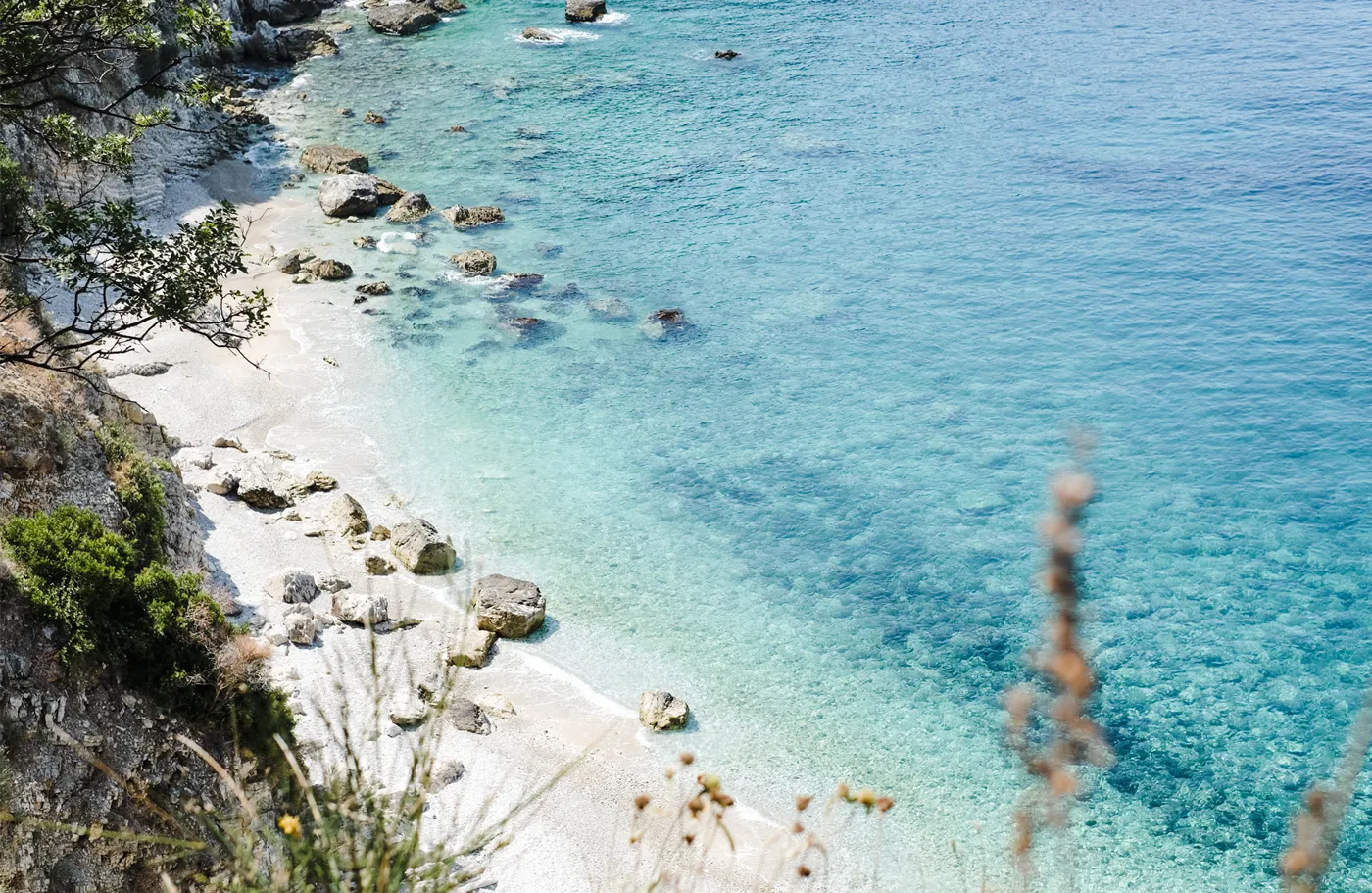
A small, secluded bay south of Dhërmi with remarkably clear water. Popular with campers and those seeking a quieter alternative to the main beaches. Several small beach bars operate in summer.
Gjipe Beach (nearby)
Accessible only by boat or a 30-minute hike through a dramatic canyon, Gjipe is one of Albania's most spectacular hidden beaches. A true adventure beach with no facilities — bring water and supplies.
Livadhi (nearby)
A long, gentle beach near Himara with shallow water perfect for families. Less dramatic than Dhërmi but more relaxed, with several waterfront restaurants and a laid-back village atmosphere.
Food & Cuisine
Fresh Ionian seafood, locally pressed olive oil, sun-ripened citrus, and raki by the sea — Dhërmi's food is the Albanian Riviera at its most delicious.
Fresh Fish
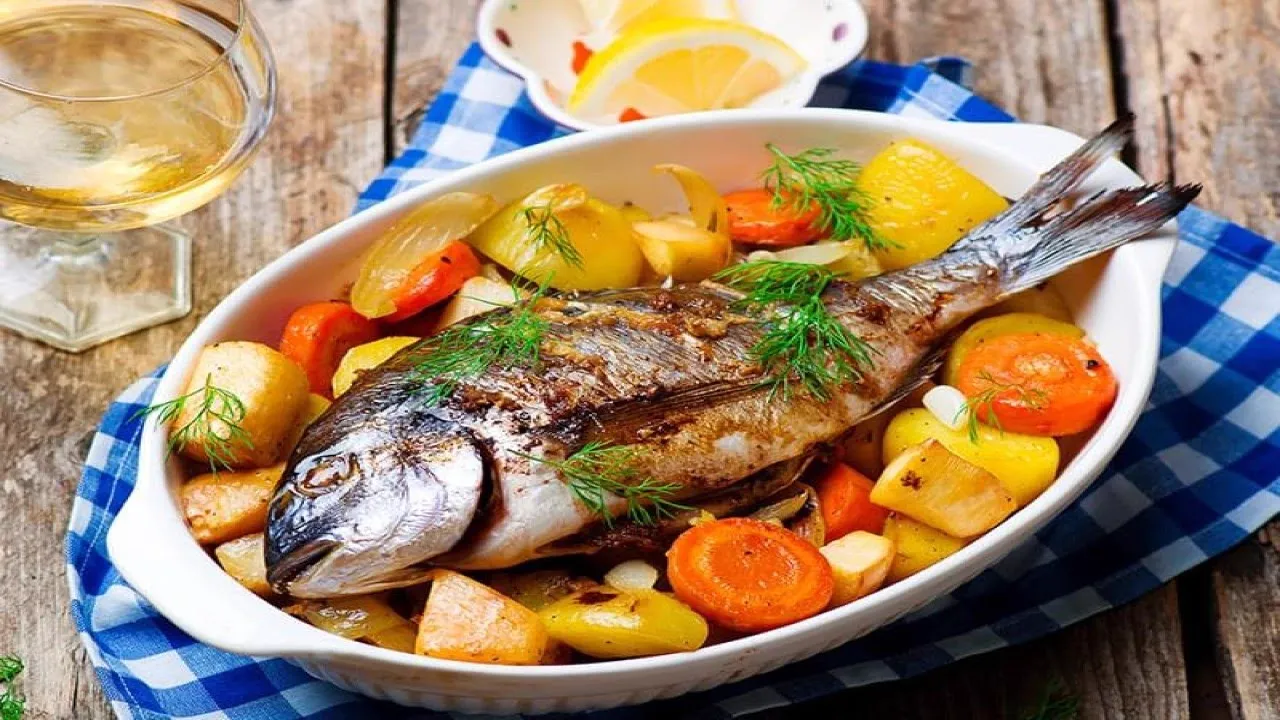
The Ionian coast delivers some of the freshest seafood in the Mediterranean. Whole grilled sea bass, sea bream, and red mullet — caught that morning by local fishermen — are served simply with olive oil, lemon, and wild herbs. The beachfront tavernas at Dhërmi make this an unforgettable experience.
Octopus
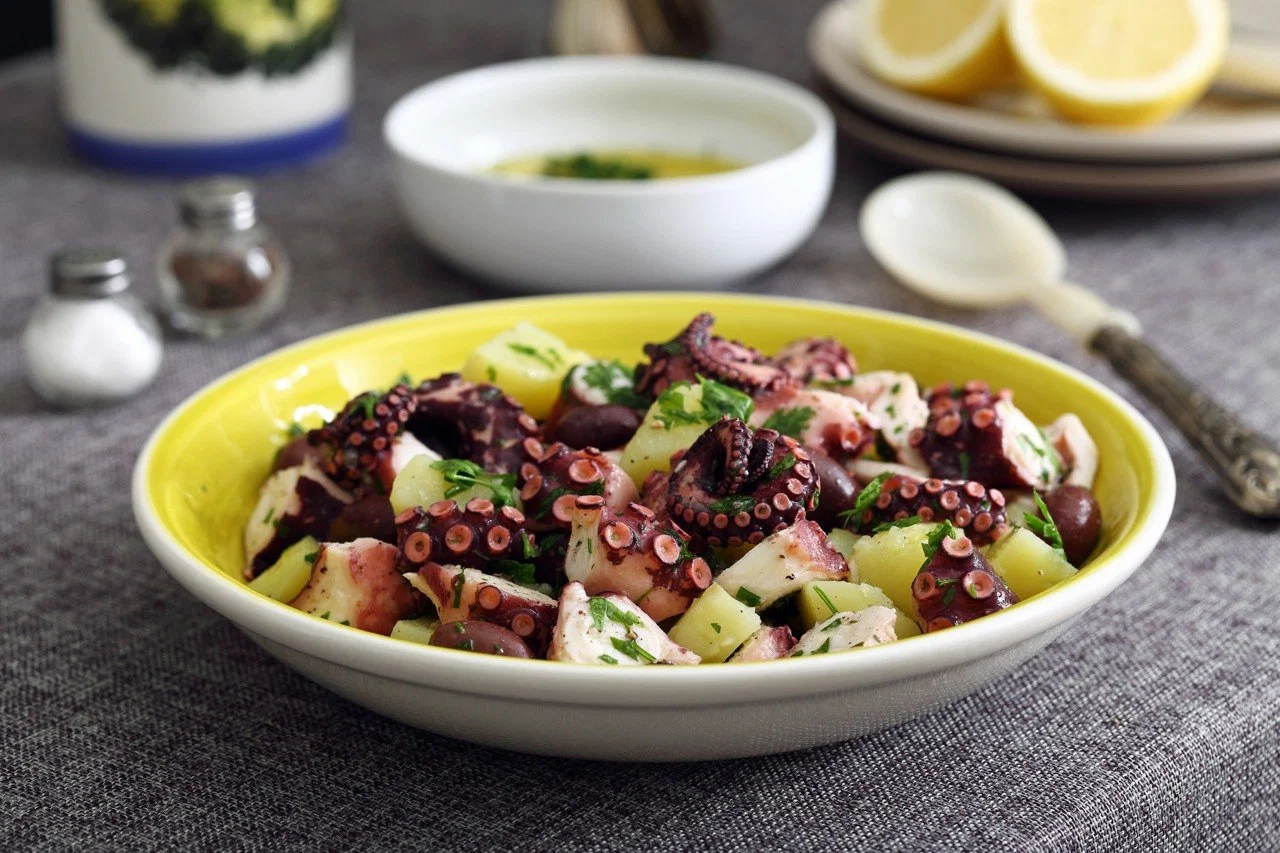
Grilled octopus is a Riviera speciality. Tenderised and charred over hot coals, served with a drizzle of local olive oil and a squeeze of lemon. Some restaurants also serve it in a cold salad with peppers and onions — the perfect light lunch between swims.
Raki
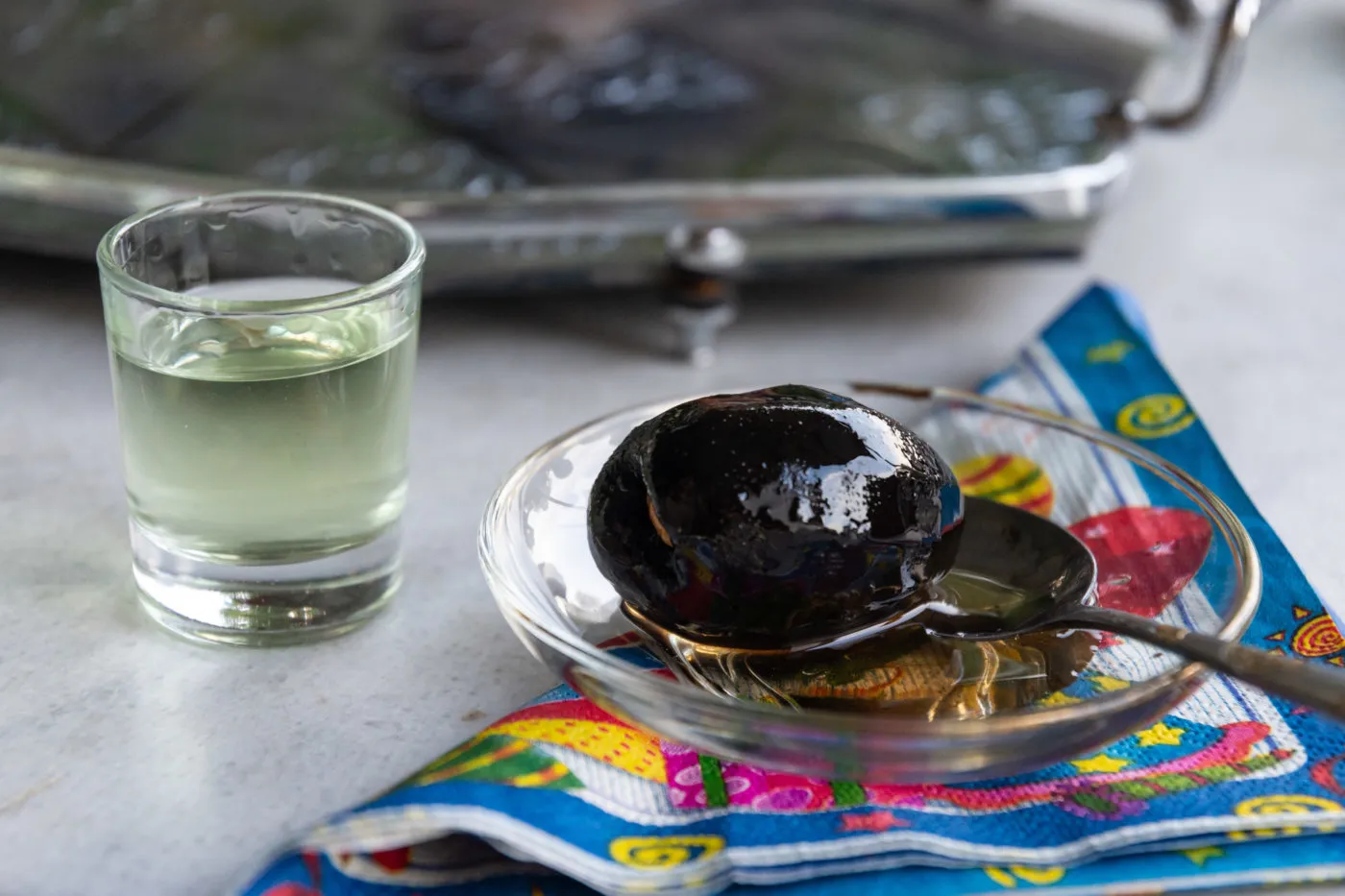
No meal on the Albanian Riviera is complete without a glass of raki — the clear grape spirit that's Albania's national drink. In Dhërmi, it often appears unbidden at the end of a meal, offered by the restaurant owner as a gesture of hospitality. Refusing is considered impolite — and unnecessary, because it's excellent.
Best Time to Visit Dhërmi
Dhërmi is a summer destination at heart, but late spring and early autumn offer the best balance of warm weather, swimmable seas, and fewer crowds.
Summer
June – August28–35°CPeak beach season. Warm Ionian waters, buzzing beach bars, and long sunny days. July and August are the busiest months — book accommodation early. The water temperature reaches a perfect 24–26°C.
Spring
April – May16–24°CWildflowers cover the hillsides and the village is at its most picturesque. The sea is still cool for swimming in April but warms nicely by late May. Perfect for hiking and exploring without the summer crowds.
Autumn
September – October20–28°CThe best-kept secret on the Riviera. September is essentially summer with fewer people. The sea is warm, the light is golden, and accommodation prices drop. October is quieter but still pleasant for beach days.
Winter
November – March8–15°CMost beach facilities close, but the hilltop village remains inhabited year-round. Mild temperatures, dramatic storms over the Ionian, and complete solitude make winter visits atmospheric — though swimming is off the table.
How to Reach Dhërmi
Dhërmi is approximately 3.5 hours from Durrës by car, following the coastal road south through Vlora and over the spectacular Llogara Pass — a mountain crossing at 1,027 metres that offers jaw-dropping views of the Ionian Sea before you descend to the Riviera.
We offer private transfers from Durrës and Tirana directly to Dhërmi — your driver will handle the mountain roads so you can enjoy the scenery.
From Tirana airport, the drive is roughly 4 hours. Public minibuses (furgons) run from Tirana to Himara with stops near Dhërmi, though a private transfer is far more comfortable for the mountain section. The Llogara Pass drive alone is worth the trip — one of the most spectacular roads in the Balkans.
Tours in Dhërmi
Swim in hidden coves, explore sea caves by boat, hike to secret beaches, or discover the hilltop village — all with local guides who know every corner of the Riviera.
Tours coming soon
We're preparing exciting new tours in Dhërmi. Check back soon or contact us to arrange a private experience.
Contact UsReady to Explore Dhërmi?
Whether you want a full-day Riviera beach tour, a boat trip to hidden caves, or a private transfer over the Llogara Pass — we'll make it happen.